
Liveaboard vs Resort Diving Bali: Cost + Sites + Experience
For diving Komodo from Bali, a liveaboard usually wins on cost per dive and site access: shared voyages start from USD 300 per person with berth and meals
For diving Komodo from Bali, a liveaboard usually wins on cost per dive and site access: shared voyages start from USD 300 per person with berth and meals included, against USD 90 per person per day for shared speedboat day trips plus your hotel and meals ashore. Resort-style diving wins on flexibility and suits mixed groups with non-divers who want land time.
That is the short answer. The rest of this page works through the reasoning honestly — the real cost arithmetic, where each format’s time actually goes, and who should choose which. One logistics note first, because it shapes everything: neither option departs from a Bali harbour. For Komodo, you fly Bali (DPS) to Labuan Bajo (LBJ), a direct flight of about 1 hour 15 minutes with one-way fares typically USD 40–80. From there you either board a liveaboard or check into a hotel and dive by day boat. Liveaboard Bali is the Bali charter desk of Komodo Luxury, and we arrange the flight together with the boat so the dates match. Routing details: flights from Bali to Labuan Bajo and Sorong.
The two formats, defined
Resort-based diving means sleeping ashore — in Labuan Bajo for Komodo trips — and going out each morning on a day boat. You return every afternoon, eat dinner in town, and choose each day whether to dive again, rest, or do something else entirely.
A liveaboard means the boat is your hotel. A phinisi sails into the national park and stays there: you wake up already at the day’s first site, dive, eat, move, dive again, and anchor for the night inside the park. Nothing about your day is spent commuting.

The honest cost math
These are our operator-direct figures — the same numbers on our Indonesia liveaboard prices page — not hypothetical constructions.
Run the comparison over three days. Three shared day trips cost USD 270 — before three nights of hotel, three days of restaurant meals, and daily harbour transfers. A shared 3D2N liveaboard starts from around USD 250–300 all told for berth, meals and diving days. By the time the land-based costs are added up, the liveaboard is rarely the expensive option; for solo travellers and couples it is usually the cheaper one, and it is not close on a per-dive basis.
The private math follows the same shape at a different altitude. A private speedboat at USD 680–800 per day suits a family that wants its own schedule but its own hotel. A private phinisi charter from USD 5,300 per yacht per night — split across the group it carries — buys the whole floating villa: crew, cabins, meals, and the park at your own pace. Our Komodo liveaboard page covers both routes in detail.
Time on site: where the formats really diverge
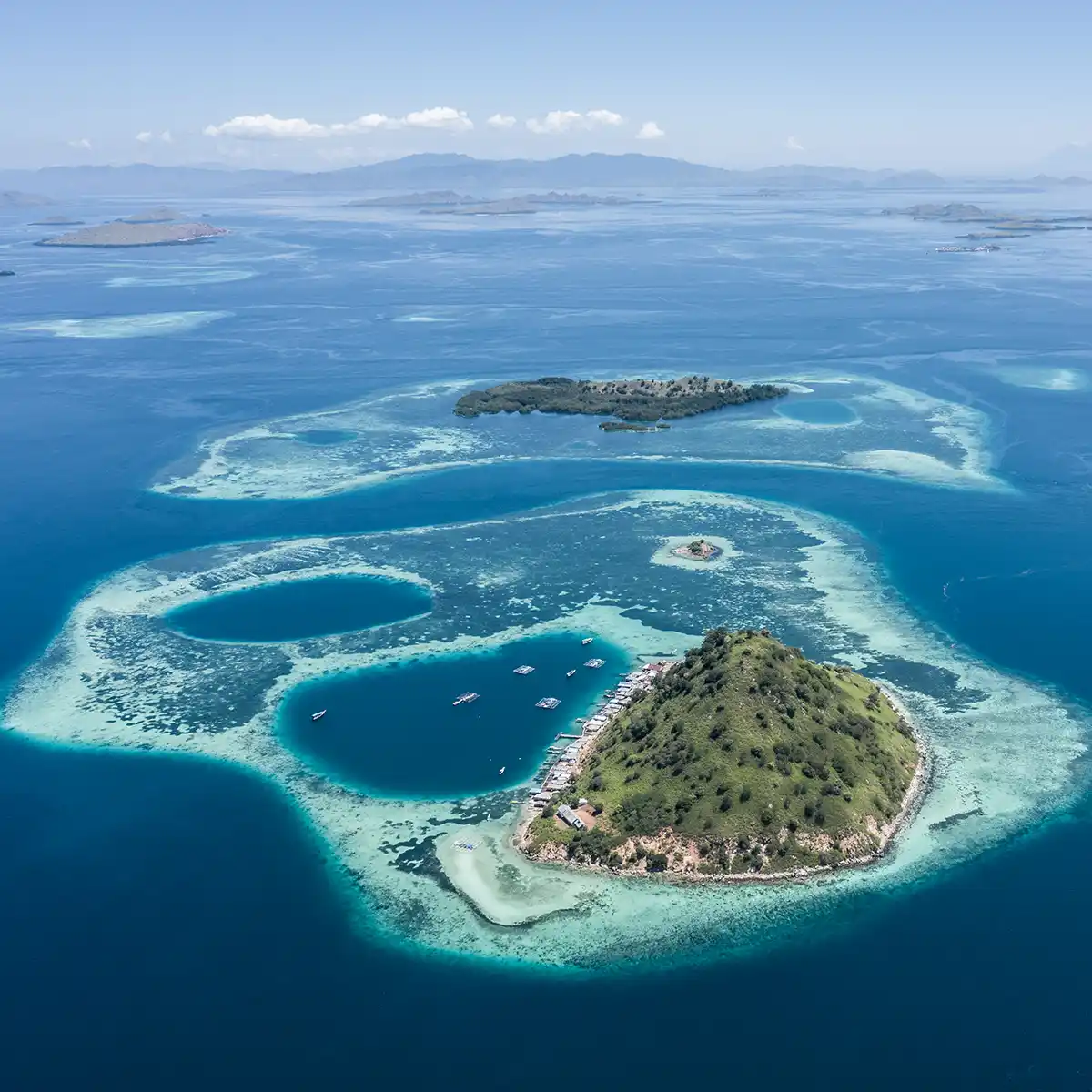
Price gets the attention, but time is the bigger difference. Labuan Bajo sits at the edge of the park; the famous central sites are a long speedboat run away. A day-trip schedule spends a meaningful share of each day in transit, arrives at marquee sites in the same mid-morning window as every other day boat, and must leave in time to be home before dark.
A liveaboard removes the commute entirely. The boat positions overnight, so you are at the site at first light, before the day fleet arrives — and still there at dusk after it leaves. Over a 3D2N itinerary that compounds into far more hours in the water and ashore in the park, and calmer, emptier versions of the same places. Southern sites and longer loops that a day boat simply cannot reach in daylight hours are routine liveaboard stops.
A typical day, side by side
The rhythm of the two formats is easier to feel than to price. A day-trip day starts at the harbour: gear checks, the outbound run, two or three stops in the busiest hours, the run home, and dinner in town — a full day, of which the park gets the middle. A liveaboard day starts already inside the park: an early dive or snorkel before breakfast, a second site mid-morning, an island walk or the Padar viewpoint in the afternoon heat, a third stop toward sunset, and dinner on deck at anchor. Neither is wrong; they are simply different holidays. One returns to civilisation every evening. The other stays where the reason for the trip is.
What about non-divers?
Here the conventional wisdom needs correcting in both directions. Komodo liveaboards are not diver-only vessels: the standard itinerary mixes snorkelling, the dragon trek on Komodo or Rinca, the Padar viewpoint hike, and beach time — many of our guests never put on a tank. A non-diving partner is not a problem on board.
What a liveaboard genuinely cannot offer is variety ashore. If half your group wants cafés, spas, land tours and a different restaurant every night, a Labuan Bajo hotel with day trips serves them better — the divers go out, everyone reconvenes at dinner. And if the concern is comfort at sea rather than interest, note that most sailing in the park is short hops in sheltered water, but a hotel bed does not move at all. Be honest about your group before you book; we will be honest with you about the fit.

Who should pick which
- Choose a liveaboard if: the park itself is the point of the trip; you want maximum time at the sites and the early-morning versions of them; you are a solo traveller or couple counting total cost rather than headline cost; or you want a private boat as the trip’s centrepiece.
- Choose resort-based day trips if: your group is split between divers and land-lovers; you want to decide each morning what the day holds; you are prone to seasickness and know it; or you are combining a taste of Komodo with a broader Flores itinerary.
- Do both: a common pattern among our guests is two or three hotel nights in Labuan Bajo bracketing a 3D2N liveaboard — town on the ends, park in the middle. It costs little more than either option alone and removes the either/or entirely.
Doing either one from Bali
Whichever format you choose, the door-to-door version from Bali is straightforward and we run it daily: private pickup at your Bali hotel around 08:00, the 10:00 flight to Labuan Bajo landing at 11:15, a 15-minute transfer, and you are boarding by noon. Sold as one itinerary on one invoice, the full Bali-to-Komodo private package starts from USD 5,000 per person for the 3D2N core, with the 7D6N best-seller from USD 8,000 per person. The complete breakdown is on our Bali to Komodo liveaboard page.
We have been operating these waters since 2015, with 9 owned phinisi, 200+ vetted partner yachts, and a 4.9/5 average across roughly 1,530 reviews — and we book both formats, so our advice is not tilted toward one. Tell us your group, dates and budget on WhatsApp at +62 811-3823-875 or sales@komodoluxury.com, and we will lay out both options with real numbers.
| Item | Day-trip (resort-based) | Shared liveaboard |
|---|---|---|
| Core cost | Shared speedboat day trip: USD 90 per person per day | Shared open-trip voyage: from USD 300 per person (cabin range 300–850; weekday shared cabins from 220) |
| Accommodation | Hotel in Labuan Bajo, paid separately | Included — your cabin is on board |
| Meals | Restaurants ashore, paid separately | Included on board |
| Komodo National Park ticket | Estimated USD 40 per international guest | Estimated USD 40 per international guest |
| Private option | Private speedboat: USD 680–800 per boat per day | Private charter: from USD 5,300 per yacht per night entry-luxury; whole deluxe phinisi from USD 3,250 per night |
Liveaboard vs Resort Diving Bali: Cost + Sites + Experience

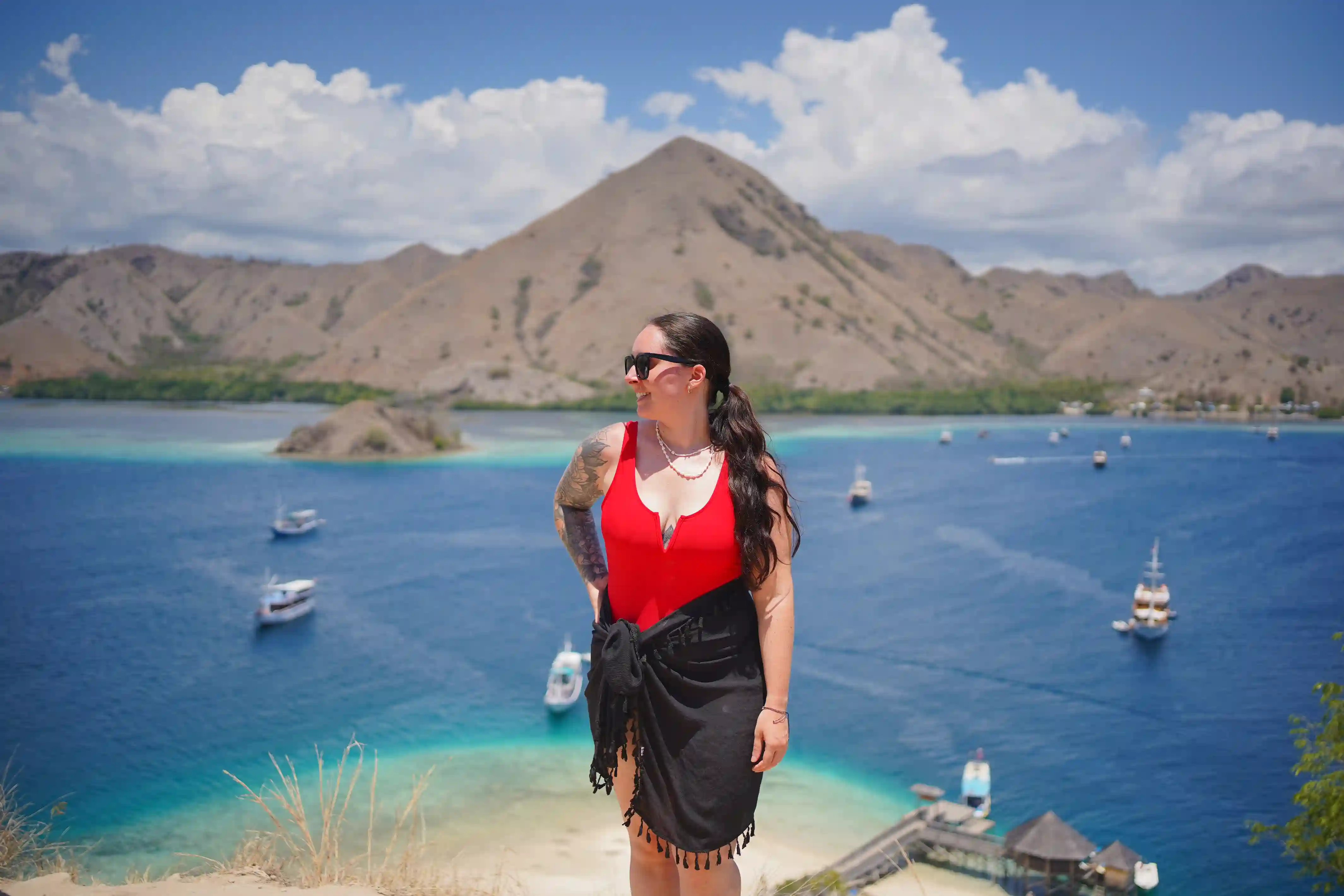
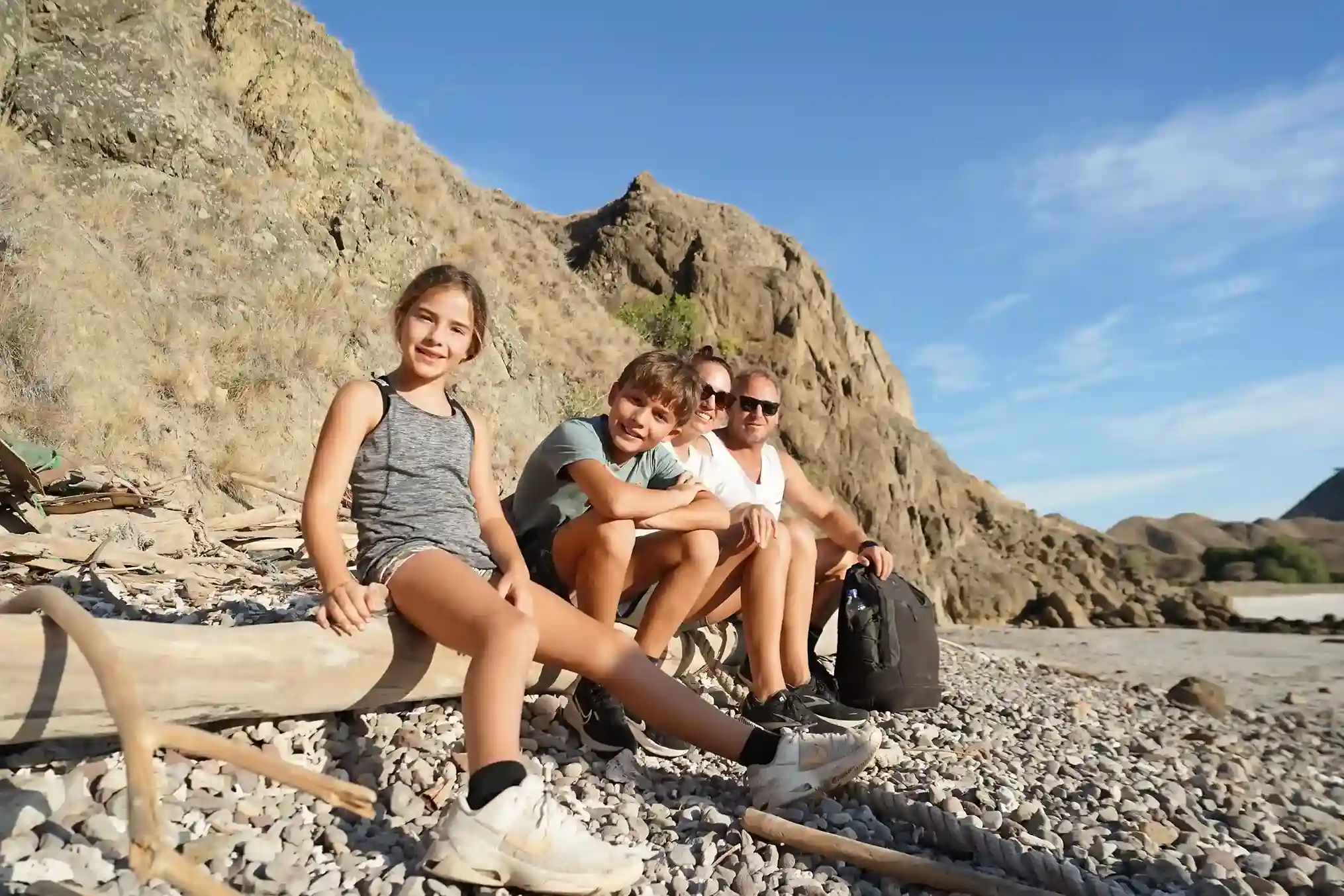


Photography from our own Komodo Luxury fleet and charters across the archipelago.
Related reading
Preventing seasickness on Bali and Komodo liveaboards
Liveaboard Bali prices in 2026 and what’s included
Komodo vs Raja Ampat: Best Liveaboard Trip from Bali?
5-Day Liveaboard Bali Charters Itinerary
We’ll ladder the routes — quote within office hours
Fastest is WhatsApp — a real charter desk, not a bot. Or send the short form and we reply by email with windows, vessels and an itemised fare plank for your month.