
How Much Does a Private Liveaboard Charter from Bali Cost?
- The vessel’s size, age, and level of luxury are the primary cost drivers.
- Itinerary length and destination, such as Komodo versus the remote Raja Ampat, significantly impact fuel and logistics expenses.
- The final quote depends on inclusions like a private chef, dive masters, and national park fees.
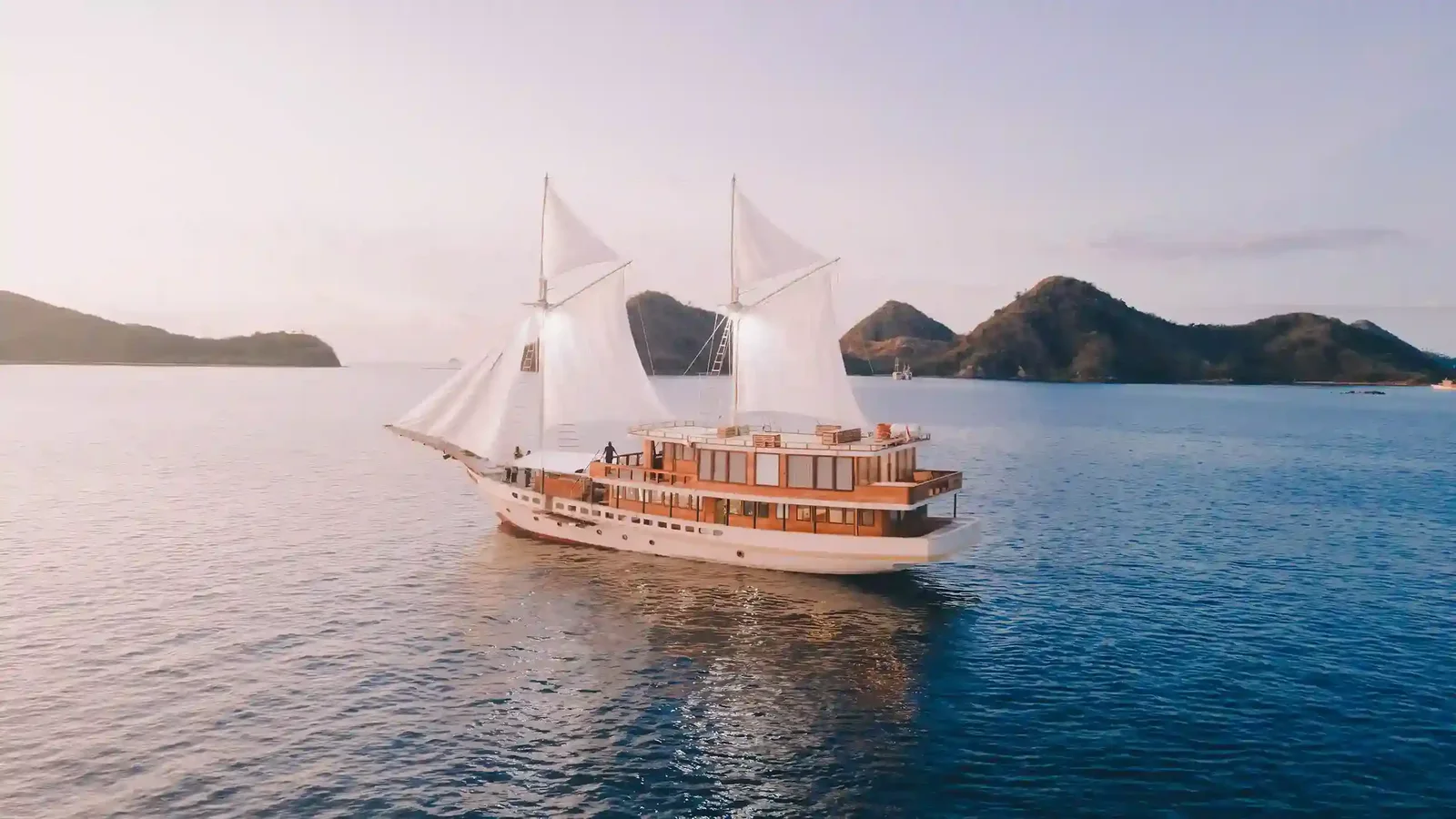
The warm, diesel-scented air hangs heavy over the harbor as you step from the tender onto the sun-bleached teak deck. Before you, the polished ironwood hull of a traditional Phinisi schooner rises, its two masts pointing toward a cloudless Indonesian sky. Your private chef is already discussing the evening’s menu with the cruise director, a spread of freshly caught snapper and tropical fruit. From the bow, you can see the volcanic cone of Lombok, a hazy silhouette across the strait. This is the start of a journey unbound by schedules or other guests. The only question that remains, floating on the sea breeze, is a practical one: what is the real investment for an experience like this? Understanding the private liveaboard charter from Bali cost is the first step in transforming this vision into a tangible itinerary.
Deconstructing the Charter Rate: What Are You Actually Paying For?
When you receive a quote for a private charter, the top-line number represents far more than just a floating hotel. It’s an all-inclusive passport to one of the most biodiverse marine environments on Earth, operated by a small army of dedicated professionals. The primary cost component is, of course, the vessel itself—its maintenance, insurance, and the sheer capital investment it represents. But the daily rate is dominated by operational expenses. A significant portion, often 15-20% of the cost, is allocated to fuel, a major variable when navigating the 17,000-plus islands of the Indonesian archipelago. The next largest allocation is for the crew. On a premier liveaboard bali experience, the crew-to-guest ratio is a critical metric of luxury. It’s not uncommon for a 12-guest Phinisi to carry a crew of 16 to 18, including a captain, a first mate, engineers, a cruise director, a private chef with sous chefs, multiple stewards, and several expert dive masters. This nearly 1.5:1 ratio ensures a level of service that is both anticipatory and unobtrusive. Then there is the provisioning. We are not talking about standard buffet fare; we are talking about curated menus, sourcing of premium international ingredients, and accommodating every dietary preference, often planned weeks in advance. These three pillars—the vessel, the crew, and the provisions—form the foundation of your charter fee.
The Vessel Spectrum: From Classic Phinisi to Superyacht Standards
The term “liveaboard” encompasses a wide range of vessels, and the cost of a private charter from Bali is directly tied to the specific ship you choose. At the heart of Indonesian maritime heritage is the Phinisi, a two-masted sailing ship whose design was recognized by UNESCO as a Masterpiece of the Oral and Intangible Heritage of Humanity in 2017. A charter on a classic, well-maintained 5-cabin Phinisi, offering comfortable ensuite cabins and ample deck space, might begin in the range of $4,500 to $6,000 per night. Stepping up, you enter the realm of modern luxury Phinisis. These are often larger, newly built vessels, measuring 45 to 55 meters in length, featuring six or seven expansive suites, dedicated spa rooms, jacuzzis, and extensive water toy collections. For these, rates typically fall between $7,000 and $12,000 per night. At the apex of the market are the superyacht-standard Phinisis. These are bespoke vessels, some exceeding 60 meters, with owner-style master suites that include private aft-facing balconies, temperature-controlled wine cellars, and even onboard cinemas. These floating palaces, representing the pinnacle of craftsmanship and service, command rates from $15,000 per night upwards. The choice depends entirely on your group’s size and desired level of opulence.
Itinerary & Destination: The Komodo Premium vs. The Raja Ampat Expedition
Where you choose to sail has a dramatic effect on the private liveaboard charter from Bali cost. The two most sought-after destinations, Komodo National Park and Raja Ampat, present different logistical challenges and, therefore, different price points. Komodo, being relatively close to Bali and Flores, is the more accessible option. A typical 7-night charter exploring the park’s 29 islands involves manageable fuel consumption. The primary additional cost here are the park fees, which as of 2023, can amount to approximately $175 per person per day, covering entrance, diving, snorkeling, and the mandatory ranger guide for dragon treks. Raja Ampat, on the other hand, is an expedition. Located off the coast of West Papua, the gateway port of Sorong is over 2,200 kilometers from Bali. This immense distance means the vessel must undertake a long and costly repositioning voyage, the expense of which is factored into the charter rate. Consequently, Raja Ampat charters often carry a 20-30% premium over equivalent Komodo trips and typically require a minimum duration of 10 to 12 nights to be worthwhile. For the ultimate adventurer, destinations like the Banda Islands or Cenderawasih Bay demand even more complex logistics and higher fuel budgets, placing them in a unique pricing category often quoted on a fully custom basis.
The Hidden Ledger: Understanding Inclusions, Exclusions, and APA
An experienced charter client knows that the base rate is just the beginning of the conversation. Understanding what is included—and what is not—is essential for accurately budgeting your trip. A standard charter agreement typically includes the hire of the vessel and its crew, all onboard meals and snacks, soft drinks, water, tea, and coffee. It also covers the use of onboard water sports equipment like paddleboards and kayaks, as well as tanks, weights, and air fills for certified divers. However, several significant costs are almost always excluded. These include alcoholic beverages (especially premium wines and spirits), crew gratuity (the industry standard is 10-15% of the base charter fee), national park and port fees, and any onboard PADI dive courses or certifications. To manage these variable expenses, many high-end charters operate using an Advanced Provisioning Allowance (APA). This is a deposit, usually 25-30% of the charter fee, paid upfront. The captain uses these funds to provision the yacht according to your specific requests—from a particular brand of champagne to a favorite cheese. A transparent, running account is kept, and any unspent funds are returned to you at the end of the charter. This system ensures the ultimate customization and is the standard for superyachts globally.
Seasonality and Timing: When to Book for Value and Exclusivity
The rhythm of the seasons in Indonesia dictates not only the best time to travel but also the price you will pay. The absolute peak season falls during July and August and again over the Christmas and New Year holidays. During these periods, demand for the best vessels is intense, and you can expect to pay a premium of 15-25% over standard rates. To secure a premier Phinisi for these dates, it is not uncommon to book 18 months or more in advance. The “shoulder seasons”—from April to June and September to October—are what many insiders consider the sweet spot. The weather, particularly for a Komodo itinerary, is idyllic, with dry conditions and calm seas. The crowds are thinner, and there is more flexibility in vessel availability and sometimes even in pricing. This is the ideal time to witness the best marine life activity, with diving visibility in Komodo often exceeding 30 meters. The low season, corresponding with the wetter months from December to March, can present opportunities for significant value. However, this comes with the risk of less predictable weather and rougher seas, and many vessels use this period for their annual dry-docking and maintenance, limiting the available fleet. Planning around these seasonal shifts is key to optimizing your liveaboard bali experience.
Quick FAQ: Your Bali Charter Cost Questions Answered
Is a private charter more expensive than booking a cabin on a shared trip?
On a per-person basis for a small party, yes. However, for a family or group of 8 to 12 people, the per-person cost of a private charter can be surprisingly comparable to booking multiple high-end cabins on a scheduled cruise. The unparalleled benefit is complete control over the itinerary, pace, and onboard ambiance—a value that is difficult to quantify.
How much should I budget for crew gratuity?
The accepted industry standard for a well-run charter in Indonesia is between 10% and 15% of the base charter fee. This is typically given to the captain at the conclusion of your voyage, who will then distribute it among the entire crew, from the engineers in the engine room to the stewards who service your cabin.
Are national park fees a significant addition to the cost?
Yes, they are a necessary and important part of the budget. For destinations like Komodo National Park, a UNESCO World Heritage site, these fees directly fund conservation efforts and ranger patrols. Depending on the length of your stay and the activities you undertake, these can add several hundred dollars per person to the total cost, an investment in preserving the pristine nature of the region for future generations, as promoted by tourism bodies like indonesia.travel.
Ultimately, the cost of a private liveaboard charter from Bali is not a simple expense but an investment in an entirely personalized and exclusive mode of travel. It’s the freedom to linger an extra hour watching manta rays feed, the luxury of having a world-class dive site to yourselves, and the joy of sharing a remote, star-lit anchorage with only your chosen companions. The true value isn’t found on a rate sheet; it’s measured in the seamless service and the unique moments that define the journey. To begin designing your own Indonesian odyssey, explore our fleet of curated liveaboard bali vessels or contact our charter specialists today to receive a bespoke proposal tailored to your vision.