
Planning a Bali Liveaboard to Komodo in October: What to Know
- Excellent visibility, often exceeding 30 meters, as the dry season concludes.
- Peak aggregation season for manta rays at renowned cleaning stations like Karang Makassar.
- Calmer sea conditions with subsiding southeast monsoon winds before the wet season’s onset.
The air hangs thick and warm, carrying the scent of salt and clove. From the deck of the phinisi, the ironwood hull slicing silently through the Flores Sea, the volcanic peaks of the Lesser Sunda Islands appear as hazy silhouettes against the dawn. This is the passage eastward from Bali, a journey that transcends mere travel. It is a deliberate immersion into one of the planet’s most dynamic marine ecosystems. As we navigate towards Komodo National Park, the October sun casts a golden hue on the water, illuminating a world on the cusp of seasonal change. The frantic energy of the summer high season has dissipated, leaving a profound sense of tranquility and exclusive access to the wonders that lie ahead.
October’s Unique Appeal: The Shoulder Season Advantage
In the world of seasoned travel, timing is everything. For those planning a bali liveaboard to komodo in october, the choice is a masterstroke of scheduling. This month occupies a coveted sweet spot in the archipelago’s calendar, a transitional period that delivers the best of the dry season with a fraction of the visitor numbers seen in July and August. The southeast monsoon, which brings dry air and occasionally choppy seas from June to September, begins to lose its grip. The result is a marine environment characterized by placid surface conditions and skies that remain predominantly clear, offering uninterrupted days of sun-drenched exploration. According to our lead expedition guide, Antoine Dubois, who has charted these waters for over 15 years, “October is the month I recommend to my own family. The park breathes. The anchorages are quieter, and you often feel as if you have legendary sites like Batu Bolong entirely to yourself.” Visitor statistics from the Komodo National Park authority support this, showing a drop of nearly 40% in visitor numbers from the August peak to October. This translates to more intimate wildlife encounters, both above and below the water. The landscape, parched and savannah-like after months without rain, holds a stark, dramatic beauty, with golden grasses covering the rugged hillsides of Padar, Rinca, and Komodo islands.
The Marine Life Encounters of October
While the terrestrial environment is compelling, the true draw of a Komodo liveaboard is the staggering biodiversity beneath the waves. October is arguably one of the most productive months for marine megafauna. The slight cooling of the water in the preceding months, driven by the monsoon, creates a nutrient-rich upwelling that fuels a massive plankton bloom. This bloom reaches its zenith in October, attracting filter feeders in spectacular numbers. The main event is the gathering of oceanic and reef manta rays. At sites like Karang Makassar, colloquially known as Manta Point, it’s not uncommon to witness a dozen or more of these majestic creatures, with wingspans reaching up to 5 meters, gliding effortlessly into cleaning stations manned by wrasses. Beyond the megafauna, the coral reefs are at their most vibrant. Sites like Castle Rock and Crystal Rock are pinnacles swarming with life, from massive schools of fusiliers and surgeonfish to hunting giant trevallies and white-tip reef sharks. Visibility regularly surpasses 30 meters, making for exceptional underwater photography conditions. A journey on one of our Komodo Phinisi charters is designed to put you at the center of this action, with dive itineraries tailored daily to the prevailing conditions and wildlife sightings.
Navigating Komodo’s Waters: Weather and Sea Conditions
A successful liveaboard expedition hinges on a deep understanding of the local meteorology and oceanography. The waters within the UNESCO World Heritage site of Komodo National Park are governed by the formidable Indonesian Throughflow, a massive volume of water moving from the Pacific to the Indian Ocean. This creates the notoriously strong currents for which Komodo is famous. In October, however, the conditions are more predictable and manageable than during the peak monsoon. The prevailing winds shift from the southeast to a more variable pattern, leading to calmer seas, especially in the protected straits between the main islands. Water temperatures are quite comfortable, typically ranging from 26°C to 28°C (79°F to 82°F). However, some southern sites, like those off the coast of Rinca and Padar, can experience cooler upwellings, with temperatures dipping to 23-24°C, so a 5mm wetsuit is advisable for those sensitive to the cold. Captain Adnan, a veteran of over 500 Komodo crossings, emphasizes the importance of navigating with the tides. “The currents here can exceed 8 knots in channels like the Linta Strait. In October, we have a stable tidal pattern that allows us to precisely time our dives at sites like ‘The Cauldron’ for an exhilarating yet safe drift.” This expert knowledge, a hallmark of a premier liveaboard bali experience, is critical for accessing the park’s most rewarding dive sites safely.
On Land: Komodo Dragons and Pink Sand Beaches
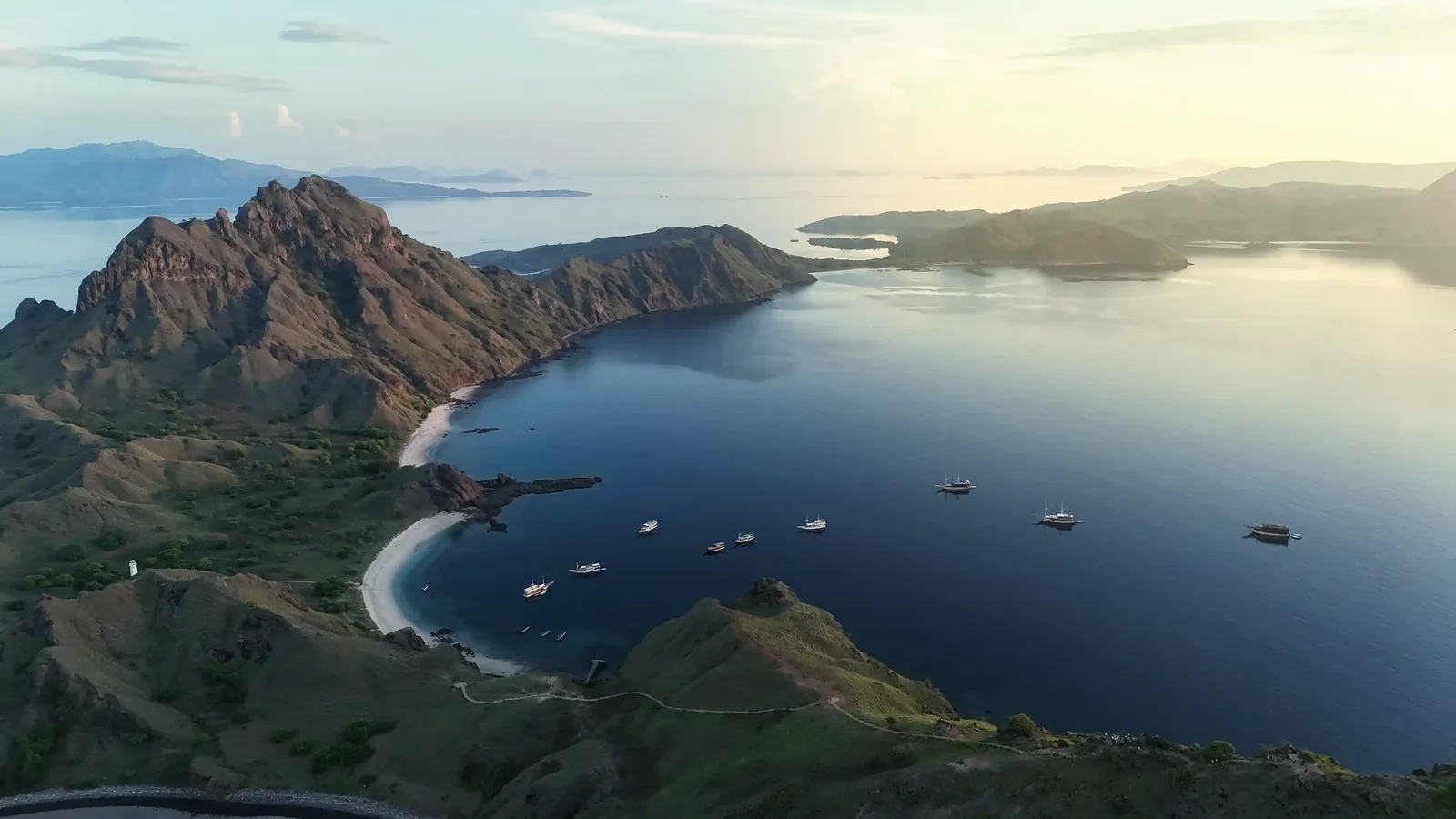
The allure of this region is not confined to its underwater realm. The park is, of course, named for the Komodo dragon (Varanus komodoensis), the world’s largest lizard. An excursion to Rinca or Komodo Island to see these prehistoric reptiles is an essential part of any itinerary. In October, the intense mating-season rivalries of mid-year have subsided. The dragons are often found conserving energy near ranger stations or water holes, offering excellent, safe viewing opportunities. A local park ranger, Bapak Suprianto, explains, “October is a good time for observation. The large males are resting after the breeding season, and you can often see them quite close to the trails as they thermoregulate in the morning sun.” The terrestrial landscape itself is a spectacle. The 45-minute trek to the summit of Padar Island rewards with an iconic panorama of tri-colored beaches—white, black, and pink—set against a backdrop of turquoise bays. The famous Pink Beach, or Pantai Merah, derives its hue from microscopic red organisms called Foraminifera, which are mixed in with the white sand. According to the official Indonesia Travel portal, there are only a handful of such beaches in the world. Exploring these shores in the relative quiet of October allows for a deeper appreciation of the park’s raw, untamed character.
Choosing Your Phinisi: What to Look for in a Luxury Charter
The vessel you choose is as much a part of the experience as the destination itself. The traditional Indonesian phinisi, a two-masted sailing schooner, is the quintessential vessel for exploring these islands. Recognized by UNESCO as an Intangible Cultural Heritage of Humanity, their construction is a testament to centuries of Bugis maritime craftsmanship. A modern luxury phinisi, however, blends this timeless design with state-of-the-art amenities. When selecting your bali liveaboard to komodo in october, consider several key factors. The experience of the crew is paramount; a seasoned captain and divemaster team can make the difference between a good trip and an unforgettable one. Look for charters that offer a low guest-to-guide ratio, ideally no more than four divers per guide, ensuring personalized attention underwater. Onboard amenities should include spacious, air-conditioned cabins with en-suite bathrooms, a dedicated camera room for photographers, and ample deck space for relaxation. The culinary program is another differentiator; the best charters feature professionally trained chefs who prepare a fusion of Indonesian and international cuisine using fresh, local ingredients. A typical itinerary departing from Labuan Bajo (a short 1-hour flight from Bali) spans 7 to 10 days, allowing for a comprehensive exploration of the park’s northern, central, and southern regions. Our fleet of luxury phinisi schooners is curated to exceed these standards, providing an elegant and comfortable platform for your adventure.
Quick FAQ: Your October Komodo Questions Answered
Is October a good time for diving in Komodo?
Absolutely. October is widely considered one of the best months for a diving liveaboard in Komodo. It offers an optimal balance of great weather, calm seas, high water visibility (often 30m+), and peak manta ray sightings, all with fewer boats and divers in the water than the high season of July and August.
What should I pack for a Komodo liveaboard in October?
Pack lightweight, breathable clothing for the daytime, a windbreaker or light jacket for cooler evenings on the water, and multiple swimsuits. For diving, a 3mm to 5mm full wetsuit is recommended due to potential thermoclines. Essential items include polarized sunglasses, a wide-brimmed hat, high-SPF reef-safe sunscreen, and any personal dive gear you prefer to use. Most charters provide a full set of rental equipment.
Do I need to be an advanced diver to enjoy Komodo?
While there are sheltered sites suitable for all certification levels, to fully experience the world-class diving Komodo offers, an Advanced Open Water certification with at least 50 logged dives is highly recommended. Many of the premier sites, such as Castle Rock and Batu Bolong, are characterized by strong currents, and experience is necessary to dive them safely and comfortably.
How far is the cruise from Bali to Komodo?
While some extended relocation trips cruise the entire 250 nautical miles (463 kilometers) from Bali, the vast majority of Komodo liveaboards start and end in Labuan Bajo, Flores. This port is a convenient and scenic 1-hour flight from Bali’s Denpasar Airport (DPS), maximizing your time within the national park itself.
October in Komodo is a time of transition and immense opportunity. The elements align to create a near-perfect environment for discovery, from the giant lizards roaming the golden hills to the majestic mantas dancing in the nutrient-rich currents. It is a chapter in the archipelago’s story that is quieter, more intimate, and deeply rewarding. At Liveaboard Bali Charters, we specialize in curating these exceptional journeys, ensuring every detail is flawlessly executed. Explore our fleet and begin planning your October voyage on the ultimate liveaboard bali charter, an expedition into the heart of Indonesia’s wild frontier.