
How to Choose the Best Bali Liveaboard Operator for You
- Vessel Type: Compare the heritage of a traditional Phinisi schooner against the speed and amenities of a modern motor yacht.
- Itinerary Focus: Determine if your priority is maximum dive time, cultural land excursions, or a balanced, leisurely exploration.
- Service & Safety: Scrutinize the crew-to-guest ratio, safety certifications, and the fine print of what is included in the charter price.
The air is thick with the scent of salt and clove, a signature perfume of the Indonesian archipelago. Underfoot, the sun-warmed teak deck of a Phinisi schooner shifts with the gentle rhythm of the Flores Sea. On the horizon, the saw-toothed silhouette of a volcanic island promises a world untouched by time. This is not merely a vacation; it is a full sensory immersion. The vessel you choose for this journey is not just your transport; it is your sanctuary, your dive platform, and your private gateway to the wonders of the Coral Triangle. Selecting the right one is the most critical decision you will make, the one that defines the entire character of your expedition.
Deciphering the Fleet: The Soul of the Phinisi vs. The Power of the Yacht
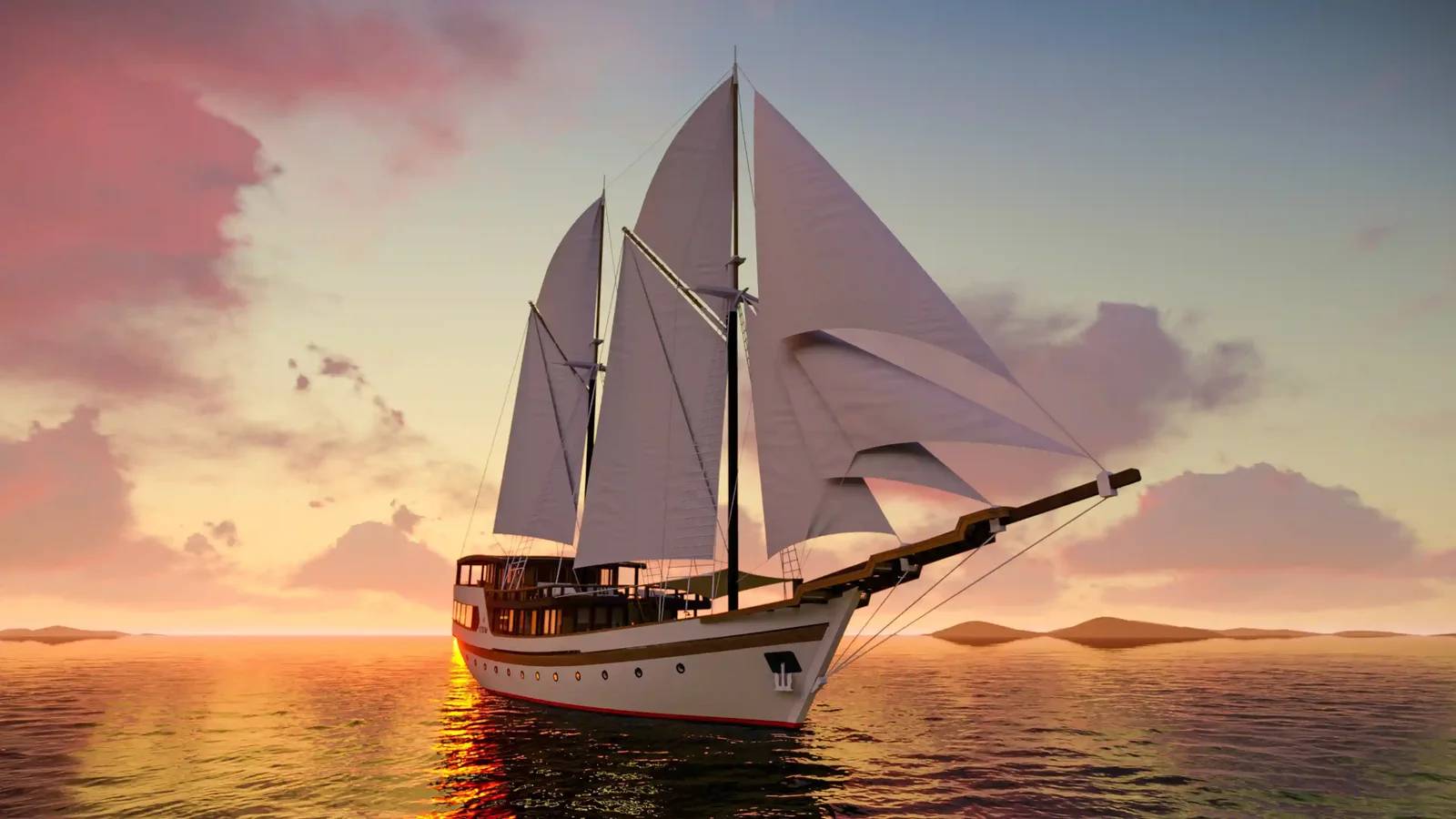
The first and perhaps most romantic choice you’ll face is the vessel itself. The Indonesian charter fleet is dominated by two distinct philosophies of sea travel: the traditional Phinisi and the modern motor yacht. The Phinisi is the iconic, two-masted sailing ship, a design born from the seafaring traditions of the Konjo people of South Sulawesi. Building these vessels is an art form so integral to the culture that it is recognized as an Intangible Cultural Heritage by UNESCO. Ranging from 25 to over 50 meters in length, these ships are almost always crafted from ironwood and teak, and their billowing sails against a turquoise sea create an image of pure exploratory magic. Opting for a Phinisi is a choice to connect with the history of these waters. On the other hand, the modern motor yacht offers a different kind of luxury. These are vessels built for speed, stability, and uncompromised comfort. Their powerful engines can cover the vast distances of the archipelago—like the 1,300 kilometers separating Komodo from Raja Ampat—with greater efficiency. They often feature larger, panoramic windows, gyroscopic stabilizers that dramatically reduce roll, and contemporary interior design. The choice is a reflection of your travel style: Do you seek the soulful creak of timber and the romance of sail, or the sleek lines and smooth, swift passage of modern marine engineering? Neither is superior; they simply offer different pathways to paradise.
Itinerary Intelligence: Beyond the Destination Map
A map that simply says “Komodo” or “Raja Ampat” tells you almost nothing. The true value of a charter lies in the nuance of its itinerary, a carefully choreographed dance between iconic sites and hidden secrets. To choose the best bali liveaboard operator, you must look past the pins on the map and inquire about the daily rhythm and philosophy of the journey. Some operators cater almost exclusively to the dedicated diver. Their schedules are intense, often involving four dives per day, starting with a 6:00 AM briefing. They target challenging, current-swept sites like Castle Rock or The Cauldron in Komodo, promising encounters with sharks and manta rays. These trips are perfect for the enthusiast looking to maximize bottom time and log unforgettable underwater moments. Conversely, other charters, like the ones we curate, embrace a more holistic approach. A day might include a morning dive, followed by a trek up Padar Island for its tri-colored beach vista, an afternoon spent with a certified guide observing Komodo dragons in their natural habitat, and a sunset cocktail on a deserted pink-sand beach. These expedition-style itineraries understand that the magic of Indonesia exists both above and below the waterline. The key is to ask for a sample daily schedule. How many hours are spent cruising versus anchored? Is there flexibility to linger if a pod of dolphins appears? A 10-night charter covering 300 nautical miles at a relaxed pace offers a profoundly different experience than one that rushes through the same distance in seven days.
The Anatomy of Onboard Luxury: Crew Ratios and Culinary Arts
In the world of high-end travel, “luxury” is an overused word. On a liveaboard bali charter, its true meaning is found in the details, and the most telling metric is the crew-to-guest ratio. A vessel carrying 12 guests with a crew of 12 or more offers a level of anticipatory service that is simply impossible on a boat with a skeleton crew. This 1:1 ratio is the gold standard. It means your dive gear is not only rinsed and stored for you, but reassembled and checked before your next plunge. It means your preferred gin and tonic, with a specific slice of lime, appears in your hand as you surface from the water. It’s the “invisible service” that elevates a great trip into an exceptional one. Beyond service, the culinary program is a massive differentiator. Discerning operators have moved far beyond standard buffet fare. Inquire about the chef’s background. Is there a focus on farm-to-table or sea-to-table dining? A top-tier charter will source its yellowfin tuna from the local fishing boats it passes and its organic produce from the fertile markets of Bali. Menus are often bespoke, designed around guest preferences and dietary needs discussed weeks in advance. The quality of onboard amenities also speaks volumes. Is there a dedicated camera room with multiple charging stations for photographers? Is a massage therapist part of the permanent crew? Is the wine list a considered collection or a basic afterthought? These elements are the fabric of true five-star service at sea.
Safety and Seaworthiness: The Non-Negotiable Foundation
While the romance of the vessel and the allure of the itinerary are captivating, they are meaningless without an unwavering commitment to safety. The Indonesian archipelago consists of over 17,500 islands, and when you are navigating remote passages, you are placing your absolute trust in the vessel and its crew. This is an area with no room for compromise. A critical question for any operator is the vessel’s maintenance history. When was its last dry-docking for a full structural survey? A well-maintained 20-year-old Phinisi can be far more seaworthy than a poorly-kept 5-year-old one. Insist on specifics. The onboard safety equipment is equally crucial. You should expect to find SOLAS-grade life rafts, an EPIRB (Emergency Position Indicating Radio Beacon), satellite phones, comprehensive medical kits, and, most importantly for a diving vessel, a large supply of medical-grade oxygen. The crew’s credentials are the final, vital piece of the puzzle. The captain should have thousands of hours navigating these specific waters, known for their powerful and often unpredictable currents. The dive guides should be, at a minimum, PADI Instructors with deep local knowledge, capable of managing complex dive profiles and ensuring the safety of every guest. According to the official tourism portal, indonesia.travel, the country’s marine biodiversity is a major draw, but navigating it requires true expertise. An operator’s reputation, built over years or decades of incident-free operations, is your best assurance.
Reading Between the Lines: Understanding the True Cost
Comparing the sticker prices of different liveaboard charters can be a deceptive exercise. A lower upfront cost can often conceal a host of additional charges that can significantly inflate your final bill. A truly professional operator will provide absolute transparency on what is included and, more importantly, what is not. Standard inclusions are typically your accommodation, all meals and snacks, and non-alcoholic beverages. Dives are also usually part of the package. The devil, however, is in the exclusions. The most significant of these are the national park and port fees. For destinations like Komodo National Park or Cenderawasih Bay, these government-levied fees can amount to over $150 per person, per day, and are rarely included in the charter price. Scuba equipment rental is another common extra, often adding $50-$70 daily to your tab. For certified divers, Nitrox (a blend of air with a higher oxygen percentage that allows for longer bottom times) can be a major expense, with some operators charging $10-$15 per tank. Finally, consider alcohol and crew gratuities. A premium liveaboard bali may include local beer and house wine, while others charge a premium for all alcoholic drinks. Gratuity is almost always extra, with the industry standard being 10-15% of the charter fee, a substantial amount to budget for. Before committing, request a detailed, itemized list of all potential extra costs. Only then can you make a true “apples-to-apples” comparison and understand the genuine value proposition of each option.
Quick FAQ: Your Pressing Questions Answered
When is the best time to book a liveaboard in Indonesia?
For the central and eastern archipelago, planning is key. The prime season for Komodo is during the dry months, from April to November, offering calm seas and clear skies. For the remote paradise of Raja Ampat, the best window is the opposite, from October to April. Due to the high demand for top-tier vessels, we advise clients to book their charters 9 to 12 months in advance, particularly for peak holiday periods.
Do I need to be an advanced diver?
Not always, but it certainly opens up more possibilities. Many itineraries can be tailored to accommodate Open Water divers. However, to truly experience the signature sites of Komodo or the Banda Sea, which are often characterized by strong currents, an Advanced Open Water certification and a minimum of 50 logged dives is highly recommended. Always be transparent with the operator about your experience level to ensure a safe and enjoyable trip.
What is the policy for solo travelers?
Solo travelers are warmly welcomed on most charters. The standard procedure is to offer two options: you can pay a single supplement (typically 65-80% of the per-person rate) for a private cabin, or you can request to be paired with another solo traveler of the same gender in a twin-sharing cabin, thereby paying the standard per-person rate.
Is specialized travel insurance mandatory?
Yes, it is absolutely non-negotiable. Every reputable liveaboard operator will require proof of a comprehensive travel insurance policy. This policy must include emergency medical evacuation and explicitly cover scuba diving activities to a depth of at least 30 meters. The cost of a medical evacuation from a remote location like the Alor archipelago can easily exceed $100,000, making proper insurance an essential safeguard.
Choosing your vessel is the genesis of your entire Indonesian odyssey. It is the single decision that will shape every sunrise, every underwater encounter, and every quiet moment of reflection. The right ship is more than a floating hotel; it is a perfectly tuned instrument for exploration, crewed by experts passionate about sharing the profound beauty of this marine wilderness. The journey to find your perfect liveaboard bali experience begins not with a click, but with a conversation. We invite you to explore our curated fleet of Indonesia’s finest Phinisis and yachts, and allow our specialists at Liveaboard Bali Charters to help you craft the voyage of a lifetime.