
Komodo Liveaboard Safety Standards In 2027
Komodo Liveaboard Safety Standards And Audits In 2027 are defined by a mix of legal requirements liveaboard Indonesia, evolving operator best practice, and guest expectations. From 2027, most reputable Bali–Komodo vessels undergo annual third‑party safety audits and daily onboard checks, with at least two full safety briefings and documented drills on every 7–10‑night expedition.
What safety standards should Bali–Komodo boats meet before leaving harbor?
Bali Komodo liveaboard safety standards in 2027 build on long‑standing Indonesian maritime rules plus international best practice. Any vessel departing Labuan Bajo or Kayangan Harbor (Lombok) for Komodo National Park should carry valid seaworthiness documents, park permits, and proof of regular maintenance. Guests can reasonably expect written procedures, trained crew, and working safety gear as the minimum baseline.
On a Bali–Komodo route of 7–10 nights, guests fly DPS–Labuan Bajo (about 1h15m) and board there, while island‑crossing formats from Kayangan Harbor in Lombok include a long open‑water leg. That offshore stretch makes structural integrity, navigation redundancy, and fire safety equipment on liveaboard vessels critical. Lifejackets for every person plus 10–20% extra, clearly marked muster stations, and liferafts suited to all guests and crew are standard for serious operators as of August 2026.
Guests should also ask about the safety record of Komodo liveaboard operators: any serious company can outline recent incident statistics, how they manage weather risks between Bali and Labuan Bajo, and what changed in their operating procedures after 2020–2025’s global safety push.
How are 2027 safety audits and daily briefings actually carried out on board?
By 2027, most quality Komodo boats use a two‑layer system: annual external and ongoing internal checks. Third‑party surveys typically review hull condition, engine and generator maintenance logs, emergency power, and compliance with legal requirements liveaboard Indonesia. Many fleets schedule these major audits around the shoulder seasons, such as March–April or October–November, when repositioning voyages are common.
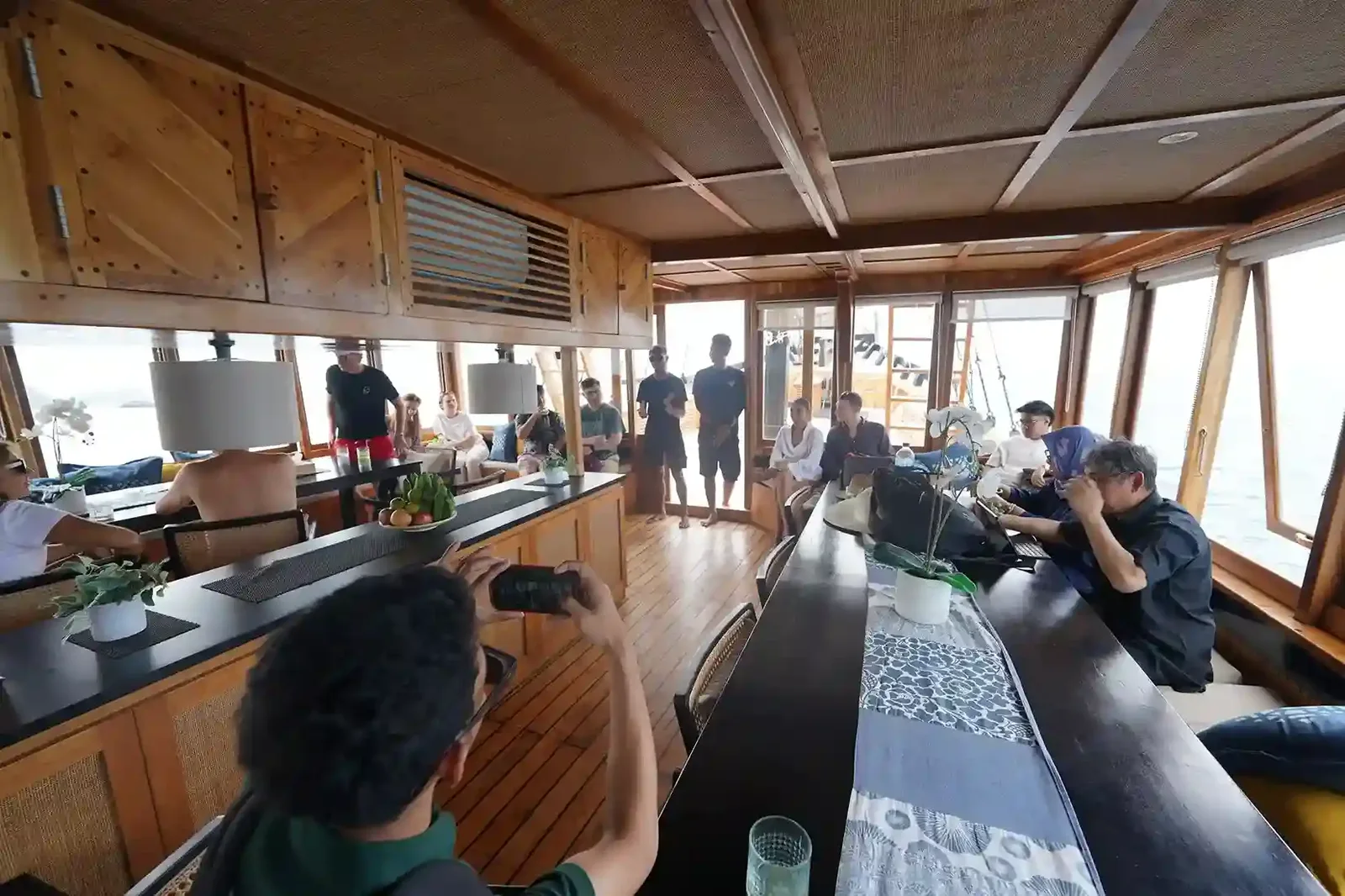
Onboard, each sailing day starts with routine inspections: fuel and oil checks, radio tests, emergency lighting checks, and dive tender readiness. A Bali Komodo liveaboard safety briefing sample normally includes how to respond to alarms, lifejacket locations, muster station practice, and what to do during night navigation. Indonesian captains commonly log these briefings in a daily logbook that guests can request to see.
For dive operations at Batu Bolong, Manta Point, or Castle Rock, 2027 standards favour a written dive plan displayed in the salon, tagging systems for tracking divers in and out of the water, and clear lost‑diver procedures. Many boats now run at least one evacuation drill per trip so guests see the process in real time before the most challenging sites.
What medical, insurance, and visa checks do guests face before boarding?
Health and paperwork checks have become more formal by 2027. Medical form requirements Komodo liveaboard departures usually include a questionnaire about cardiovascular issues, lung conditions, and recent surgeries. Divers over a certain age or with declared conditions are often asked for a doctor’s clearance issued within the last 6–12 months, depending on the operator, as of August 2026.
Bali Komodo liveaboard insurance requirements typically include travel insurance that covers emergency evacuation and, for divers, a policy including decompression sickness treatment. Operators may request proof of coverage before final payment. Some also ask guests to sign a waiver acknowledging the remoteness of Komodo National Park and transit legs between Bali and Labuan Bajo.
Visa requirements for Komodo liveaboard via Bali depend on nationality and stay length. Many visitors still use Indonesia’s visa‑on‑arrival or e‑visa systems through Ngurah Rai International Airport (DPS) in Denpasar, then join the liveaboard after a domestic flight to Komodo Airport (LBJ) in Labuan Bajo. Guests should confirm passport validity (usually six months minimum) and entry rules on official Indonesian government channels before paying deposits.
How do dive skills, check-out dives, and Bali training affect safety in Komodo?
The drift, depth, and currents of Komodo National Park mean operator expectations for diver readiness are higher in 2027 than a decade ago. Many boats require open water check out dives before Komodo’s signature sites. These may be scheduled near Bali, around Padangbai, or at easier Komodo locations to assess buoyancy, air consumption, and response to mild current.
For divers returning after a break, a refresher course in Bali before Komodo is increasingly recommended. Several centres near Denpasar or Padangbai can run skills reviews in a pool or protected bay within half a day. Guests often combine this with short Bali dive courses before Komodo liveaboard trips, upgrading from Open Water to Advanced to handle Batu Bolong and Castle Rock safely.
Operators in 2027 tend to group dives by experience: newer divers enjoy more moderate sites or guided profiles, while highly experienced teams handle the strongest conditions. Guests should expect crew to ask honestly about logged dives and to adjust plans if currents, visibility, or weather deviate from seasonal norms, particularly outside the May–September fair‑weather window.
What family and child safety measures are expected on Komodo liveaboards in 2027?
Family travel has pushed operators to refine child‑focused procedures. Toddler safety on Komodo liveaboard itineraries now often includes portable baby gates, child‑sized lifejackets, and clear rules such as mandatory adult supervision on exterior decks and in tenders. Parents should ask for photos of rail heights and cabin layouts before booking as of August 2026.
For non‑diving children, many Bali–Komodo boats offer alternative activities during dives: supervised snorkeling in calm bays, drawing or wildlife talks in the lounge, and daytime naps in air‑conditioned cabins. Families commonly choose departures in the drier April–October season, when calmer seas around Sumbawa and Komodo reduce motion for small children.
Prospective guests can cross‑check options with resources focused on family operations, such as a Family Friendly Bali Komodo Liveaboard overview. It remains important to remember that Komodo is a remote area: children with chronic medical needs should have a clear plan with their doctor plus adequate medication and backups, as the nearest fully equipped hospitals are on Bali, not inside the park.
How do logistics like airports, money, and luggage affect safety and comfort?
Logistics planning has a direct impact on stress and safety margins. Many operators now coordinate airport pickup for Komodo liveaboard guests from Ngurah Rai (DPS) or Labuan Bajo (LBJ). Pre‑arranged transfers reduce missed departures and late‑night searches for drivers, particularly during peak season July–August.
ATM access before Komodo liveaboard boarding is easier in Bali than in the small towns of eastern Indonesia. Guests are encouraged to withdraw enough local currency in Denpasar, Canggu, or Ubud for park fees, crew tips, and incidental expenses, as onboard card terminals may be unreliable. Cash also helps if flight delays force unexpected hotels or meal stops en route.
Lost luggage solutions for liveaboard guests usually involve emergency gear loans from the boat or Bali partner shops, plus help with airline claims. Packing one full change of clothes, medication, and basic dive items (mask, computer) in carry‑on remains one of the simplest 2027 safety habits. Many guests now add a one‑night Bali stopover for buffer time, leveraging Bali layover ideas before Komodo liveaboard departure to relax and adjust before boarding.
- Typical Bali–Komodo expedition duration: 7–10 nights, boarding in Labuan Bajo after the ~1h15m DPS–LBJ flight.
- Liveaboard price range as of August 2026: roughly US$900 for budget shared cabins to US$4,000+ for luxury private suites.
- Recommended minimum insurance: emergency evacuation plus dive accident coverage valid in Indonesia.
- Standard daily routine: morning safety check, dive briefings, logged headcounts on entry and exit from water.
- Required permits: Komodo National Park entry and marine reserve fees, usually collected in cash or added to trip cost.
- Best sea conditions for most guests: May–September, with July–August as peak demand and driest weather.
- Common boarding points: Labuan Bajo for Komodo routes and Kayangan Harbor (Lombok) for island‑crossing formats.
Frequently asked questions
how much does Komodo Liveaboard Safety Standards And Audits In 2027 cost in Bali?
Safety itself is included in the trip, but higher standards often correlate with price. As of August 2026, Bali–Komodo itineraries typically range from about US$900 for a basic shared‑cabin expedition to US$4,000+ for a luxury suite. Mid‑range boats with robust audits, modern equipment, and strong safety records usually sit between these figures.
is Komodo Liveaboard Safety Standards And Audits In 2027 worth it in Bali?
For remote multi‑day voyages, stronger safety standards and documented audits are widely considered worthwhile. They influence vessel reliability, emergency readiness, and crew training across open‑water crossings in the Komodo region. Guests often report that clear procedures and modern safety gear noticeably reduce stress, especially on overnight passages and high‑energy dive sites.
what is included in Komodo Liveaboard Safety Standards And Audits In 2027?
Common inclusions are regular hull and engine surveys, documented fire and abandon‑ship drills, up‑to‑date lifejackets and liferafts, first‑aid and oxygen kits, radio and navigation checks, and formal safety briefings. Many operators add diver‑specific protocols, such as check‑out dives, surface support plans, and clear response procedures for lost divers or changing currents.
Do I need training or a refresher before joining a Bali–Komodo liveaboard?
Most divers benefit from updated skills before tackling Komodo’s currents. A refresher course in Bali before Komodo or additional Bali dive courses before Komodo liveaboard departures help sharpen buoyancy, emergency response, and current management. Some vessels make check‑out dives mandatory, especially for those with long gaps since their last logged dives.
How do safety standards relate to sustainability and future fleet investments?
Higher safety standards increasingly go hand in hand with efficiency and sustainability. Newer boats investing in safer designs often also explore greener technologies discussed in resources like Eco Luxury Bali Komodo Liveaboard Trends Towards 2030 and the Investor Outlook For Bali Komodo Liveaboard Fleets In 2027, alongside the Future Of Bali Based Charter Yachts Visiting Komodo In 2027.
To check current safety procedures, availability, or custom requirements for your group, contact the BD desk of Juara Holding Group (part of Juara Holding Group — since 2015) via WhatsApp 628113823875 or email sales@komodoluxury.com.
Last updated 1 August 2026