

Halmahera Liveaboard — North Moluccas Frontier
Halmahera liveaboard expeditions are rare Indonesian dive cruises crossing the North Moluccas between Sulawesi and Papua.
Halmahera liveaboard expeditions are rare Indonesian dive cruises crossing the North Moluccas between Sulawesi and Papua. Typically 8–11 nights, they explore coral gardens, lava flows and reef walls dived by only a handful of boats each season, often linked to repositioning trips between Lembeh, Raja Ampat and the Banda Sea.
What makes a Halmahera liveaboard different from classic Komodo or Raja Ampat routes?
Halmahera sits between Sulawesi and Papua, off the main tourist circuit, so liveaboard schedules here are limited to a few expeditions per year. Compared with a Raja Ampat liveaboard itinerary, you see almost no other boats, yet enjoy comparable biodiversity and healthy coral. Halmahera’s seamounts, channels and black-sand slopes host pelagics, schooling fish and exceptional macro.
Currents can be strong, similar to Raja Ampat vs Komodo liveaboard conditions, but dive traffic is far lighter. This is ideal for divers who have already visited Komodo or Raja and now want something more exploratory without sacrificing marine life density. Trips frequently run between Lembeh, Ternate, Bacan and southern Halmahera, with some routes continuing towards Misool or the Banda Sea.
Because departure dates are sparse, many guests plan a once-per-year “expedition window” and lock in 12–18 months ahead, particularly for photography‑focused groups keen to capture uncrowded reefs, schooling fusiliers and volcanic backdrops that still feel like frontier Indonesia.

How do Halmahera expeditions link with Raja Ampat and Banda Sea crossings?
Most boats reach Halmahera as part of longer movements between Sulawesi, Raja Ampat and the Banda Sea. From October to April, many vessels base in Raja Ampat, matching the prime season for central and north Raja. As they reposition, some schedule Halmahera liveaboard trips, then continue into crossings such as a banda sea crossing 2027 style route.
This means a Halmahera cruise can join a Raja Ampat north vs central liveaboard loop in one direction, or extend southwards towards Seram and the Banda Islands. Guests often combine two back‑to‑back itineraries, for example 10 nights Halmahera then 9–10 nights Raja Ampat, to maximise value from long‑haul flights.
Because the same fleets also serve Derawan, Cenderawasih and Komodo, planning can include side routes such as a derawan islands liveaboard or Alor. Our advisors help compare seasonal windows—Komodo April–November, Raja Ampat October–April, Banda Sea September–November & March–April—so Halmahera becomes the “bridge” that connects several world‑class regions in one extended journey.
Who is Halmahera suitable for, and what diving conditions should you expect?
Diving in Halmahera suits confident intermediates to advanced divers comfortable with currents and blue‑water drifts. The area shares traits with the best Raja Ampat liveaboard itinerary options: fish‑heavy coral slopes, manta cleaning stations in some sectors, and macro hotspots around volcanic sand. Visibility is often 20–30 m, with water temperatures generally 27–29°C.
Because sites are far apart and infrastructure is limited, a liveaboard platform offers the safest and most practical access. Many trips welcome capable beginners who have at least 20–30 logged dives and recent experience in currents, similar to expectations on a Raja Ampat liveaboard for beginners. Crew briefings focus on negative descents, deploying SMBs and buddy discipline, supported by experienced dive guides.
Photographers appreciate Halmahera’s combination of wide‑angle reef scenery and critters such as frogfish, nudibranchs and cephalopods around lava flows—conditions comparable to the best Raja Ampat liveaboard for underwater photography, but with fewer divers in the water.
How does cost compare to Raja Ampat and other Indonesian expeditions?
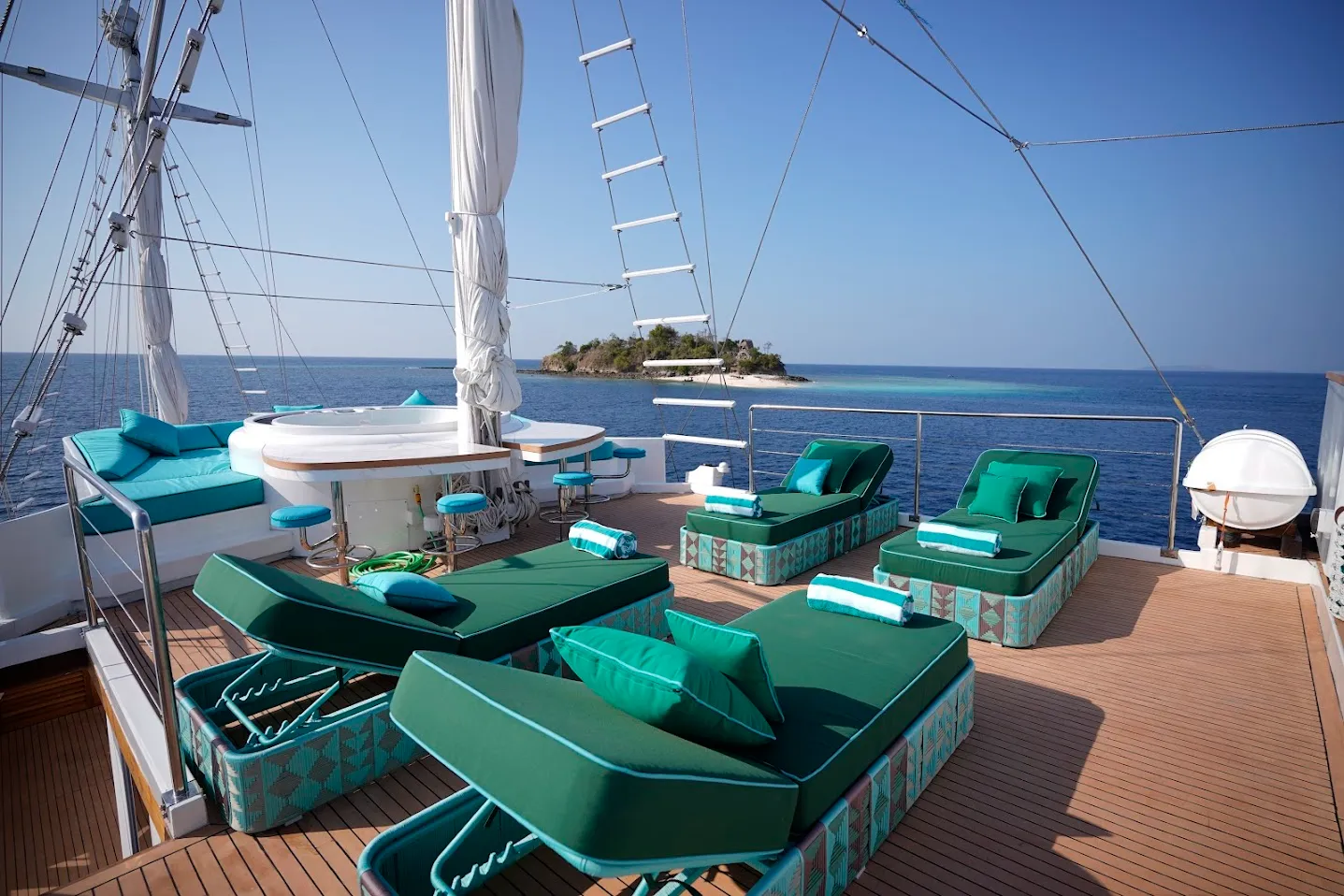
Because Halmahera is typically part of longer expedition routes, pricing is similar to premium Raja Ampat cruises rather than short Komodo trips. As of August 2026, mainstream Indonesian liveaboards range from simple shared cabins around the equivalent of a raja ampat liveaboard under 2000 USD for 7 nights, up to VIP and VVIP yachts exceeding standard raja ampat cruise cost brackets.
Our Komodo shared open trips start from USD 220/person for 3D2N (as of August 2026), but Halmahera departures more often use expedition‑equipped vessels, closer to the mid‑to‑high end. Overall spend depends on cabin category, trip length, season, and whether you join a repositioning voyage or a round‑trip itinerary.
To manage budgets, guests sometimes book Halmahera paired with a shorter Raja Ampat liveaboard under 3000 USD, or look for early‑bird specials on Raja Ampat liveaboard 2025 and Raja Ampat liveaboard 2026 schedules. Our planners outline total trip cost including domestic flights, marine park fees where applicable, and optional private charters.
How can Bali-based travellers and snorkellers integrate Halmahera into wider plans?
Many guests start in Bali, using it as a hub before venturing east. A dedicated guide page on bali before liveaboard add‑ons explains how to combine villa stays with charter flights and transfers. Typical routes are Bali–Makassar–Ternate or Bali–Manado–Ternate, depending on domestic airline timetables as of 2026.
Those also targeting Raja often ask how to get to raja ampat from bali for liveaboard. The standard route is Bali–Sorong by domestic flight via Jakarta, Makassar or Manado, then direct harbour transfer to the ship. From there, boats may sail a Raja Ampat central vs south liveaboard circuit, continue across to Halmahera, or operate a one‑way adventure ending near North Sulawesi.
Non‑divers can still enjoy the region. Some boats offer Raja Ampat snorkelling liveaboard programs that align with Halmahera transits, using tenders to access shallow reefs and lagoons. This flexible approach lets mixed groups share the same expedition, combining world‑class snorkelling and advanced scuba within one voyage.
How do you actually choose and book a Halmahera or Raja Ampat expedition?
Choosing among Halmahera and Raja routes often starts with comparing raja ampat north vs central liveaboard options and the best raja ampat liveaboard for mantas versus macro‑heavy Halmahera slopes. Photographers may prefer itineraries that include Dampier Strait and Misool reefs before or after Halmahera for manta and soft‑coral coverage.
To answer “is raja ampat liveaboard worth it”, most returning guests highlight the density of life and manta encounters, especially on carefully planned Raja Ampat liveaboard itinerary combinations. A Bali based raja ampat liveaboard makes logistics easier for those starting or ending with Bali holidays, with transfers, hotels and domestic flights coordinated in one plan.
Guests can book raja ampat liveaboard online alongside Halmahera segments, or work with our advisory team to tailor both legs. Availability is tight on expedition routes, so early planning—12–24 months ahead—offers the best choice of cabin categories across Deluxe, VIP and VVIP fleets within our 240+ vessel network.
- Typical Halmahera expeditions: 8–11 nights, 3–4 dives per day including night dives (as of August 2026).
- Domestic access: flights via Manado, Makassar or Sorong, plus port transfer by car/boat depending on itinerary.
- Expected water temperatures: approximately 27–29°C, 3 mm wetsuit usually sufficient for most divers.
- Currents: moderate to strong at seamounts and channels; SMB and reef hook recommended for experienced divers.
- Supported trip styles: scuba‑focused, with limited Raja Ampat snorkelling liveaboard capacity on selected vessels.
- Extension options: combine with Raja Ampat, Komodo, Alor, or a derawan islands liveaboard for wider Eastern Indonesia coverage.
- Operator background: Liveaboard Bali by Komodo Luxury, active across Indonesia since 2015 as part of Juara Holding Group.
Halmahera Liveaboard — North Moluccas Frontier
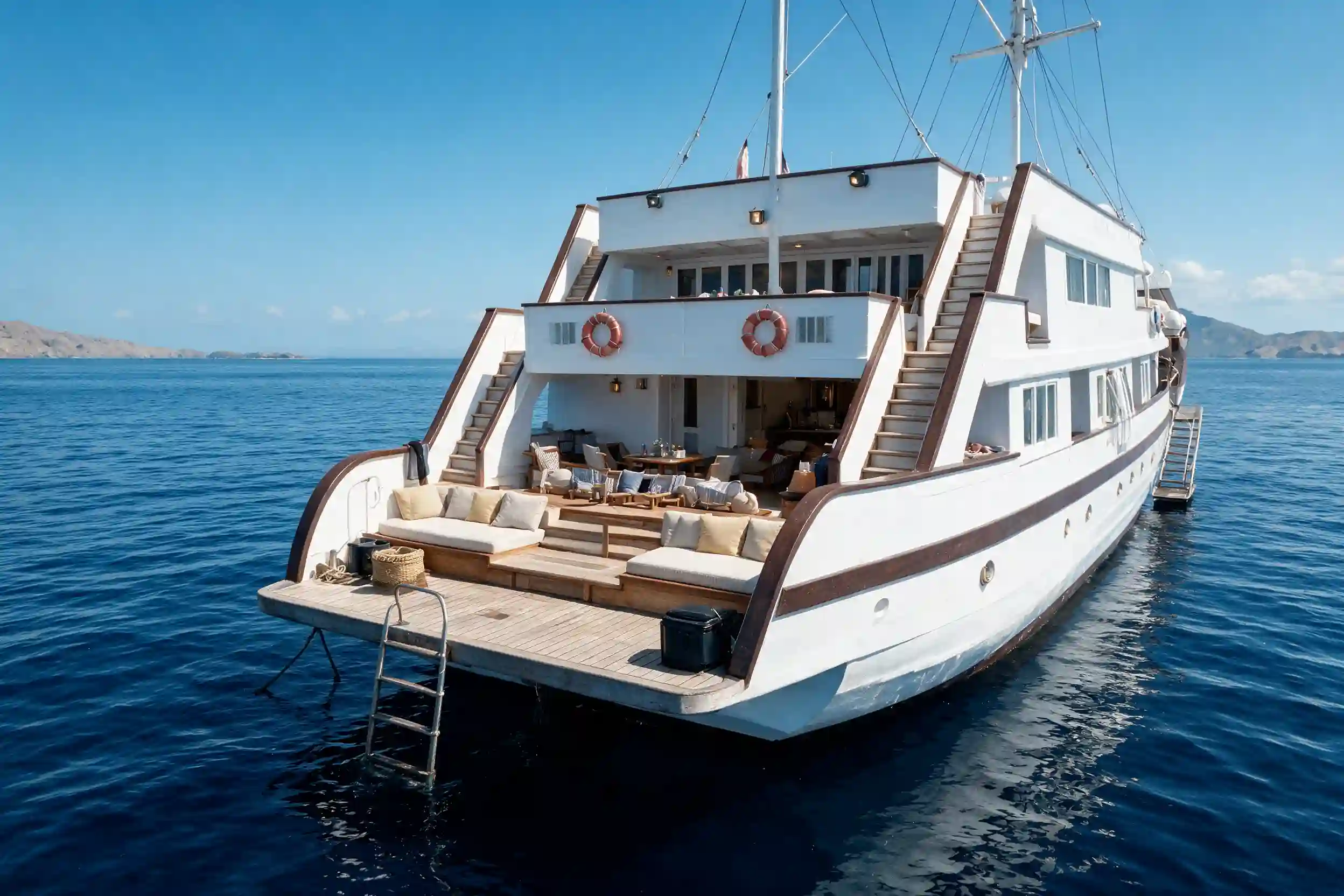
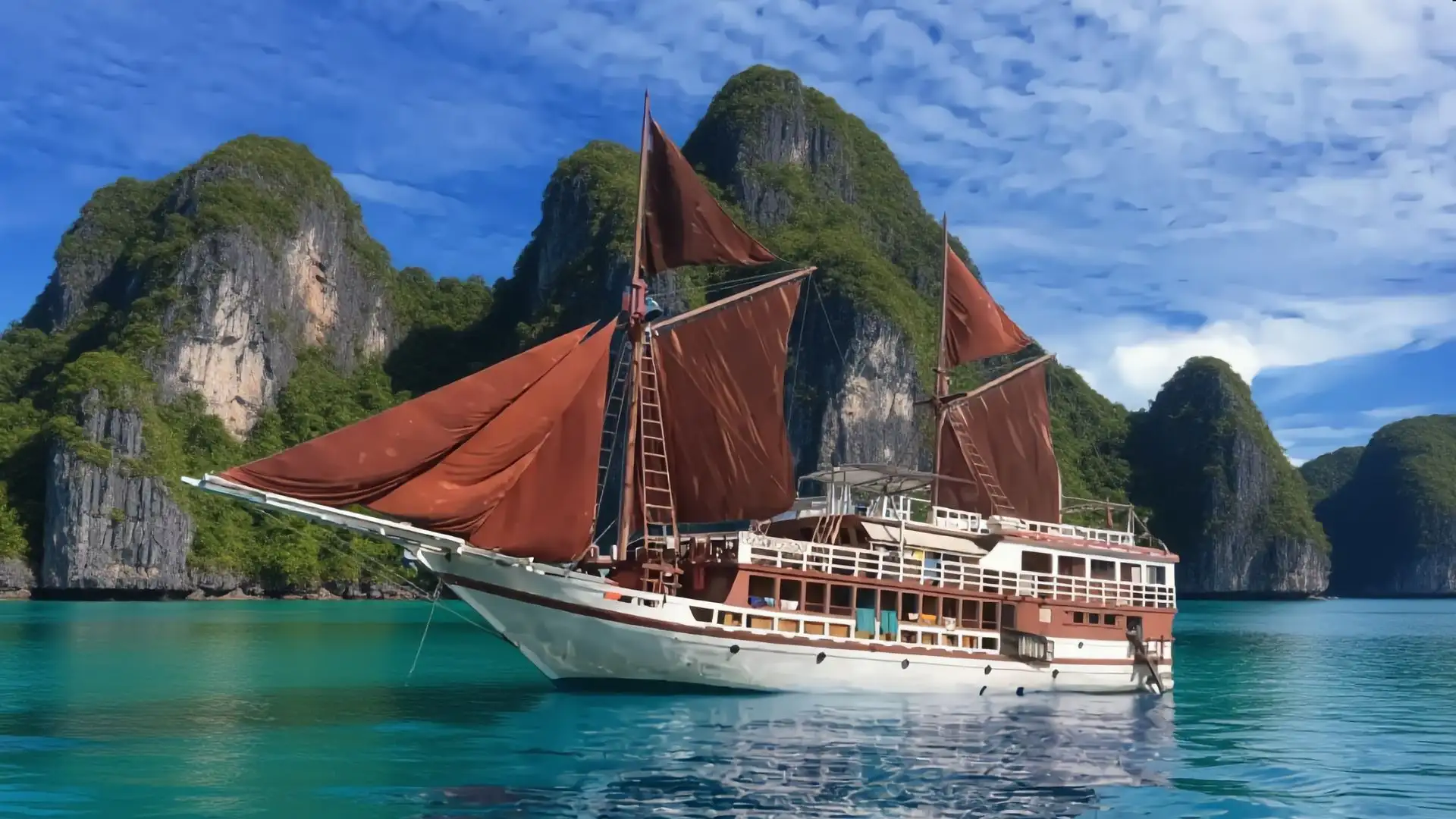
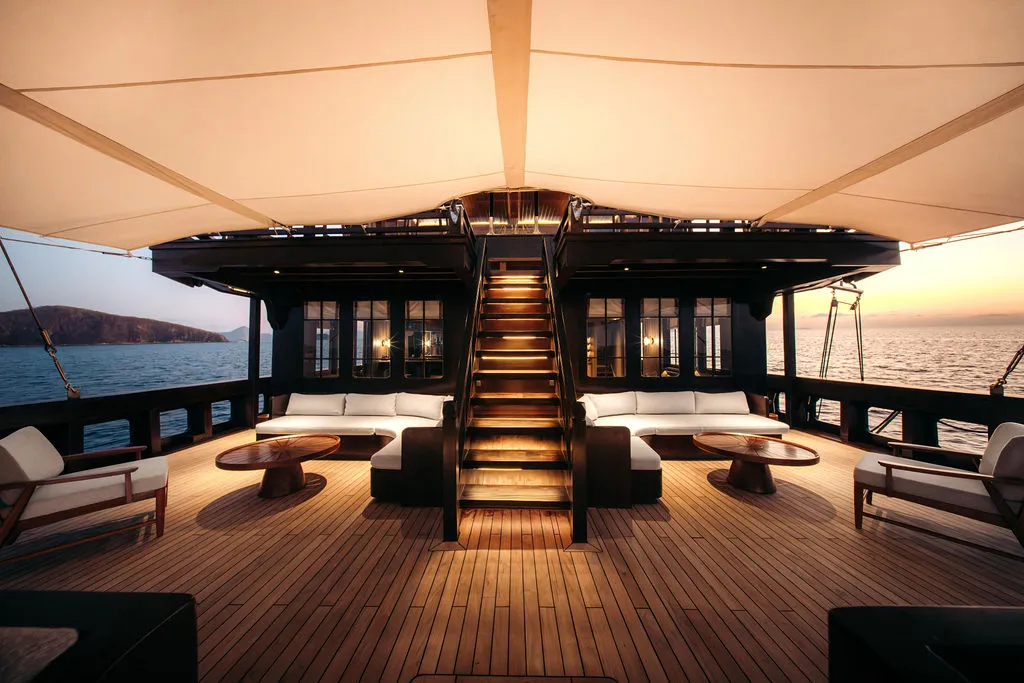
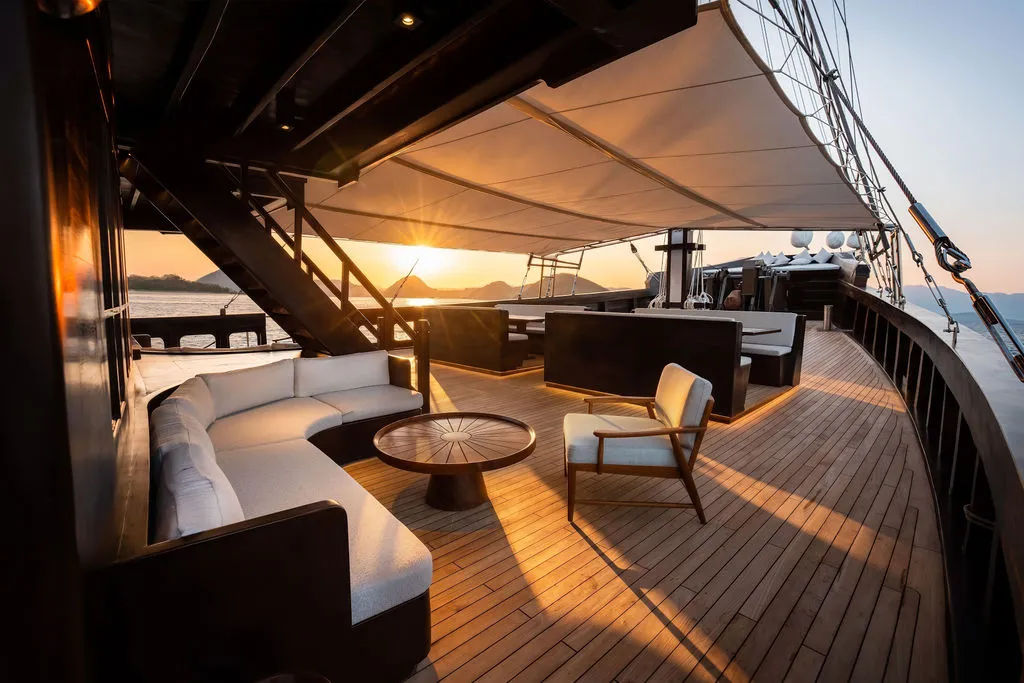
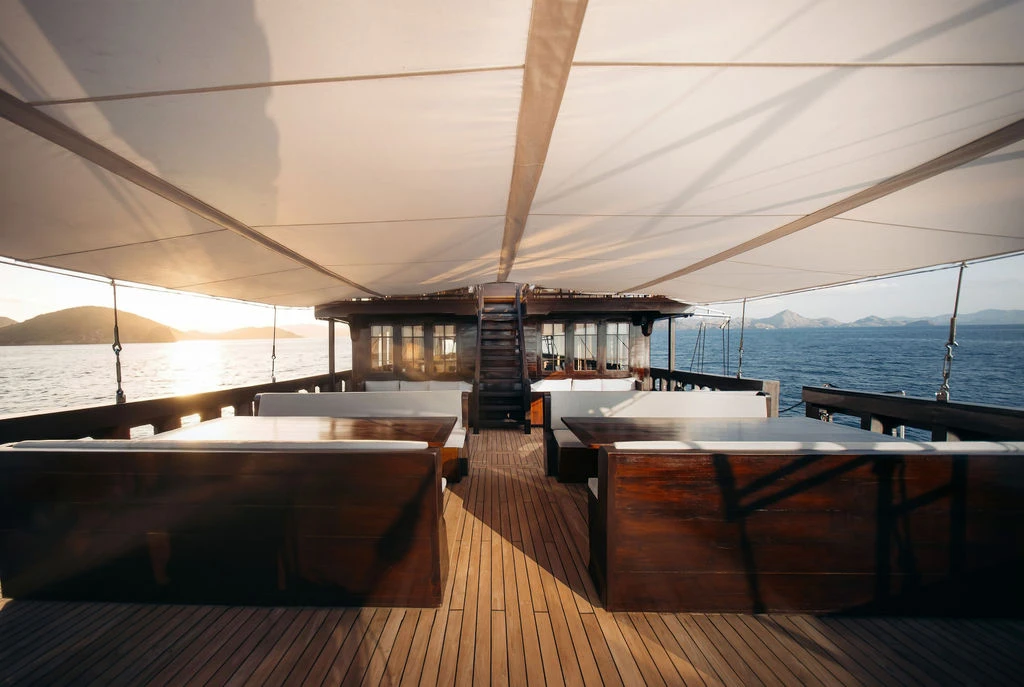
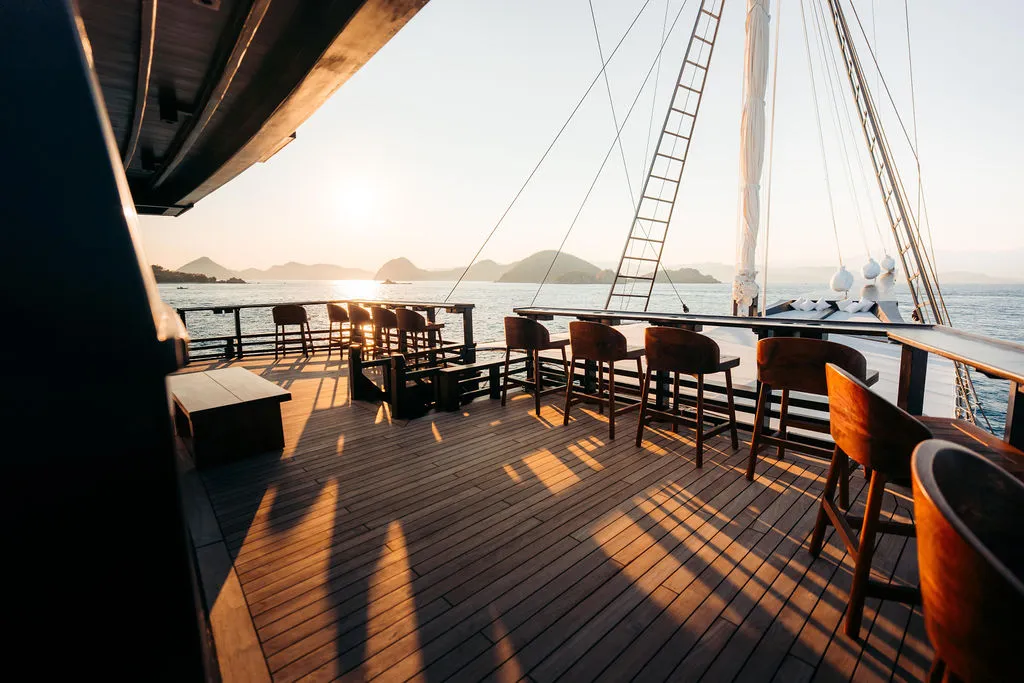
Photography from our own Komodo Luxury fleet and charters across the archipelago.
Frequently asked questions
Halmahera is the largest island in North Maluku, positioned between Sulawesi and West Papua in eastern Indonesia. It lies north of Seram and south of Morotai, with Ternate and Tidore to the west. This location puts it on the natural sea route between Lembeh, Raja Ampat and the Banda Sea, ideal for expedition liveaboards.
Diving in Halmahera features vibrant coral slopes, volcanic topography, seamounts and black‑sand critter sites. Expect schooling fusiliers, jacks, reef sharks, turtles and rich macro life, occasionally combined with manta or mobula encounters. Conditions can resemble Raja Ampat, with currents ranging from gentle to strong, generally better suited to confident divers and photographers.
Most guests fly domestically to gateways such as Ternate, Sorong or Manado, then transfer by car and tender to their liveaboard. Because schedules are limited, spots are usually tied to broader Raja Ampat or Banda itineraries. Planning early allows pairing Halmahera with the best Raja Ampat liveaboard itinerary for your goals and budget.
Boats typically visit Halmahera during transition periods between Raja Ampat and other regions, mainly October–April and around Banda Sea crossing windows. Exact months depend on fleet movements and weather forecasts. Since departures are few, checking Raja Ampat liveaboard 2025 and Raja Ampat liveaboard 2026 schedules early helps identify linked Halmahera dates.
Yes, Halmahera often links directly with Raja Ampat. Many itineraries run Sorong–Halmahera–Lembeh or the reverse, enabling guests to experience both areas in one longer voyage. You can also join only the Raja sector, for example a raja ampat liveaboard under 3000 USD, then add Halmahera as a second leg if schedule and budget allow.
To plan a Halmahera liveaboard or combined Raja Ampat route tailored to your dates and experience level, contact the Komodo Luxury desk via WhatsApp 628113823875 or email sales@komodoluxury.com.
We’ll ladder the routes — quote within office hours
Fastest is WhatsApp — a real charter desk, not a bot. Or send the short form and we reply by email with windows, vessels and an itemised fare plank for your month.