
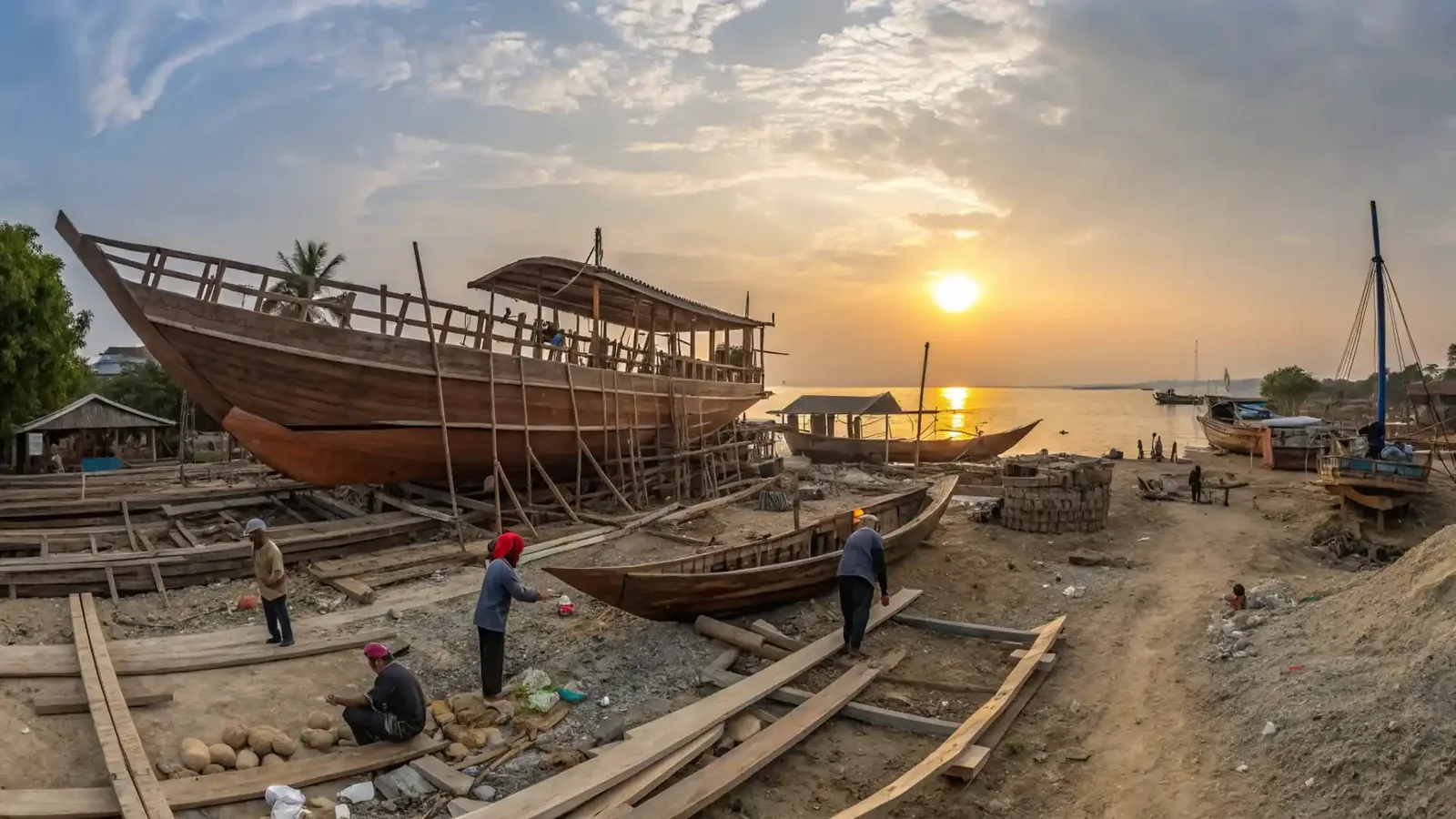
Phinisi Schooners: History & Craft
A phinisi is a traditional two-masted wooden schooner from South Sulawesi, built by Bugis-Makassar shipwrights using pinisi rigging and mostly ironwood hulls. Since at least the 19th century, these cargo vessels have sailed Indonesia’s archipelago; today, many are 30–50 m, reimagined as luxury phinisi liveaboard Indonesia cruise and dive boats.
What is a phinisi and why did UNESCO recognise it in 2017?
The term “phinisi” refers to the sail plan and rig of a wooden schooner developed by Bugis and Makassar seafarers in South Sulawesi. The boats themselves are usually built in villages such as Ara, Tana Beru and Lemo-Lemo, Bulukumba, using age-old hand tools and dowel‑joint techniques. Historically, they carried cargo across the archipelago and to Singapore from at least the late 1800s.
In 2017, UNESCO inscribed “Art of Boatbuilding in South Sulawesi” on the Representative List of the Intangible Cultural Heritage of Humanity. This listing protects not a single vessel but the knowledge system: apprenticeship from master to younger carpenter, ritual launches, and the communal way decisions are made on the beachyard. Today’s komodo phinisi boats keep that heritage alive while serving tourism instead of freight.
How are phinisi schooners actually built in Bulukumba today?
Bulukumba, on South Sulawesi’s southeast coast, is still the heart of Indonesian wooden shipbuilding. Along a roughly 3 km stretch of sand, hulls up to around 50 metres are assembled directly on the beach. Shipwrights work largely without formal blueprints, preferring scaled wood models, chalk lines and experience passed down over generations.
Construction typically begins with the keel and backbone using locally sourced hardwoods such as ironwood (ulin) or bitti. Planks are hot‑bent over fires, then fastened with wooden pegs or steel bolts. A large hull may take 18–36 months to complete, depending on size, finance and weather interruptions. Since the 2000s, many owners have added steel engine rooms, modern navigation electronics, and safety systems to meet international charter expectations for a phinisi liveaboard Indonesia itinerary.
Liveaboard Bali by Komodo Luxury works with several Bulukumba yards as a dedicated construction arm, advising on layouts optimised for diving, Bali phinisi charter operations and long-range cruising.
How did working cargo phinisi turn into modern liveaboards and dive cruisers?
Until the late 20th century, most phinisi were engine-assisted cargo vessels running routes like Makassar–Papua, carrying timber, rice or cement. From the 1990s onward, as tourism increased in eastern Indonesia, owners began converting hulls into passenger schooners. Cabins replaced cargo holds; galleys and salons appeared where sacks once sat.
By the early 2000s, phinisi had become central to Bali adventure cruise by phinisi itineraries and the emerging komodo phinisi liveaboard market. Design priorities shifted: reinforced dive decks, compressors, camera stations and freshwater capacity were added. Today’s flagship VVIP phinisi, such as Celestia or Lamima in our network, combine traditional rigging with stabilisers, desalination plants and satellite internet, operating as phinisi liveaboard ring of fire Indonesia expeditions through Komodo, Raja Ampat, Banda Sea and Alor.
This evolution explains common buyer questions around phinisi vs yacht planning. Motor yachts often offer higher speeds and all‑steel builds; phinisi schooners emphasise heritage aesthetics, warm wood interiors and under‑sail experiences when conditions allow.
Phinisi vs modern dive liveaboard Indonesia: which is better for you?
Choosing between a traditional phinisi and a fully modern steel liveaboard for Indonesia diving depends on priorities. Phinisi generally cruise at 7–10 knots, slower than many steel motor yachts, so itineraries such as Bali to Komodo phinisi routes may take slightly longer. In exchange, guests enjoy large open decks, artisanal carpentry and the feeling of sleeping inside living maritime heritage.
Modern steel dive boats often feature wider beams for dive skiffs and sometimes additional stability in rougher crossings. However, many new‑build phinisi now incorporate bulbous bows and ballast calculations done by naval architects to improve seakeeping, especially for ambitious phinisi liveaboard Bali to Raja Ampat or Banda Sea crossings.
The key is matching boat class and layout to the route: a deluxe komodo phinisi cruise focused on snorkeling may prioritise shaded sundecks and family cabins, whereas technical diving trips to Raja Ampat or Alor may need more compressor capacity and gear storage, features now common even on heritage-inspired schooners.
How do Bali phinisi liveaboards connect with Komodo and the wider Ring of Fire?
Bali is the main international gateway for many guests before boarding a Bali phinisi liveaboard. From Denpasar (DPS), a typical flight to Labuan Bajo (LBJ) for a komodo phinisi cruise takes about 70–80 minutes. Some itineraries offer Bali to Komodo phinisi expeditions, repositioning boats along the Nusa Tenggara chain via Lombok, Sumbawa and Moyo.
These extended Bali komodo phinisi charter trips can include volcano views, reef walls and manta cleaning stations in a single journey. As of August 2026, Bali to Komodo phinisi price ranges widely: shared three‑night trips may start near the USD 220 per person level of simple open trips, while high‑season exclusive phinisi charter Bali to Komodo on VVIP vessels can reach well above USD 18,000 per night for full‑boat usage.
Beyond Komodo, many schooners continue across the Ring of Fire to Alor, Banda Sea and Raja Ampat, following seasonal windows: Komodo mainly April–November, Raja Ampat from October–April, with Banda Sea crossings often scheduled September–November and again in March–April when seas tend to be calmer.
What does Liveaboard Bali by Komodo Luxury add to the phinisi story?
Liveaboard Bali is the dedicated liveaboard platform of Komodo Luxury, operating since 2015 as part of Juara Holding Group. The network covers over 240 vessels across Deluxe, VIP and VVIP classes, including renowned names such as Dunia Baru, Alila Purnama, Lamima, Manta Mae, King Neptune and Celestia. Many of these are traditional or hybrid phinisi.
Beyond brokerage and charter, the group maintains close partnerships with Bulukumba shipyards, supporting new-build komodo phinisi and refit projects with naval-architecture input, interior design, and safety upgrades. This enables future‑focused layouts for phinisi liveaboard Bali operations, ensuring cabins, galleys and crew areas are optimised for international charter standards while respecting Bugis-Makassar craftsmanship.
Travelers can combine a komodo liveaboard on a wooden schooner with villa stays and transfers via our sister service in Bali, or join a scheduled komodo open trip as a budget-friendly way to experience life on a phinisi before committing to an exclusive phinisi charter Bali or Raja Ampat voyage.
- As of August 2026, shared 3D2N Komodo open trips start from about USD 220 per person (weekday departures, excluding park fees).
- Komodo National Park marine entrance fees for foreign divers average around IDR 300,000 per diver per day including park, diver and harbour components.
- Typical phinisi lengths for charter range from 25–50 metres, carrying roughly 8–24 guests in 4–12 cabins.
- Bali–Labuan Bajo flights take approximately 1 hour 10–20 minutes gate‑to‑gate on major Indonesian carriers.
- Prime seasons: Komodo April–November; Raja Ampat October–April; Banda Sea crossings September–November and March–April.
- VVIP phinisi charters in Indonesia can exceed USD 18,000 per night for private full‑boat usage as of August 2026.
- Many modern phinisi now include desalination plants, satellite comms and full dive facilities (compressors, nitrox on select boats).
Frequently asked questions
Phinisi Schooners: History & Craft?
Phinisi schooners are wooden sailing vessels rooted in Bugis-Makassar culture from South Sulawesi, evolving from 19th‑century cargo traders to 21st‑century charter yachts. Built mostly in Bulukumba on open beaches, they use hardwood hulls, traditional joinery and two-masted pinisi rigs. Since 2017, UNESCO has recognised this boatbuilding art as intangible cultural heritage.
Is a phinisi safe and comfortable for modern cruising and diving?
Well-maintained phinisi can be both safe and comfortable, combining traditional hulls with modern engines, navigation and safety gear. Many komodo phinisi liveaboard vessels now feature steel-reinforced engine rooms, fire detection, life rafts and stabilising design tweaks. Comfort depends on class: Deluxe focuses on essentials, while VIP and VVIP offer ensuite cabins, air‑conditioning and gourmet dining.
What is the difference between a phinisi and a modern steel dive liveaboard Indonesia boat?
A phinisi is typically a wooden, two‑masted schooner built using heritage techniques, prioritising character, open decks and sailing aesthetics. A modern steel dive liveaboard usually offers faster cruising speeds, a wider beam and industrial-style dive infrastructure. Both can deliver high-end experiences; the choice depends on preference for tradition versus purely functional, contemporary design.
How much does a Bali to Komodo phinisi charter cost?
As of August 2026, entry-level shared trips on simpler boats can approach the USD 220 per person range for short 3D2N itineraries (excluding fees and flights). A private bali komodo phinisi charter ranges roughly from a few thousand US dollars per night for smaller Deluxe boats to above USD 18,000 per night for VVIP exclusive phinisi charter Bali to Komodo sailings.
How do I book the best Komodo phinisi or a phinisi liveaboard Bali deal?
To secure the best komodo phinisi or phinisi liveaboard Bali option, start 6–12 months ahead for peak July–September dates. Compare layouts, safety equipment, and dive setups, then reserve via a reputable operator. Liveaboard Bali by Komodo Luxury curates vetted boats and periodically publishes limited liveaboard Indonesia deals on select departures.
To plan or build your own phinisi experience—shared trip, private Komodo phinisi cruise from Bali, or future custom new-build—contact the Komodo Luxury desk on WhatsApp 628113823875 or email sales@komodoluxury.com.
Last updated 6 August 2026