
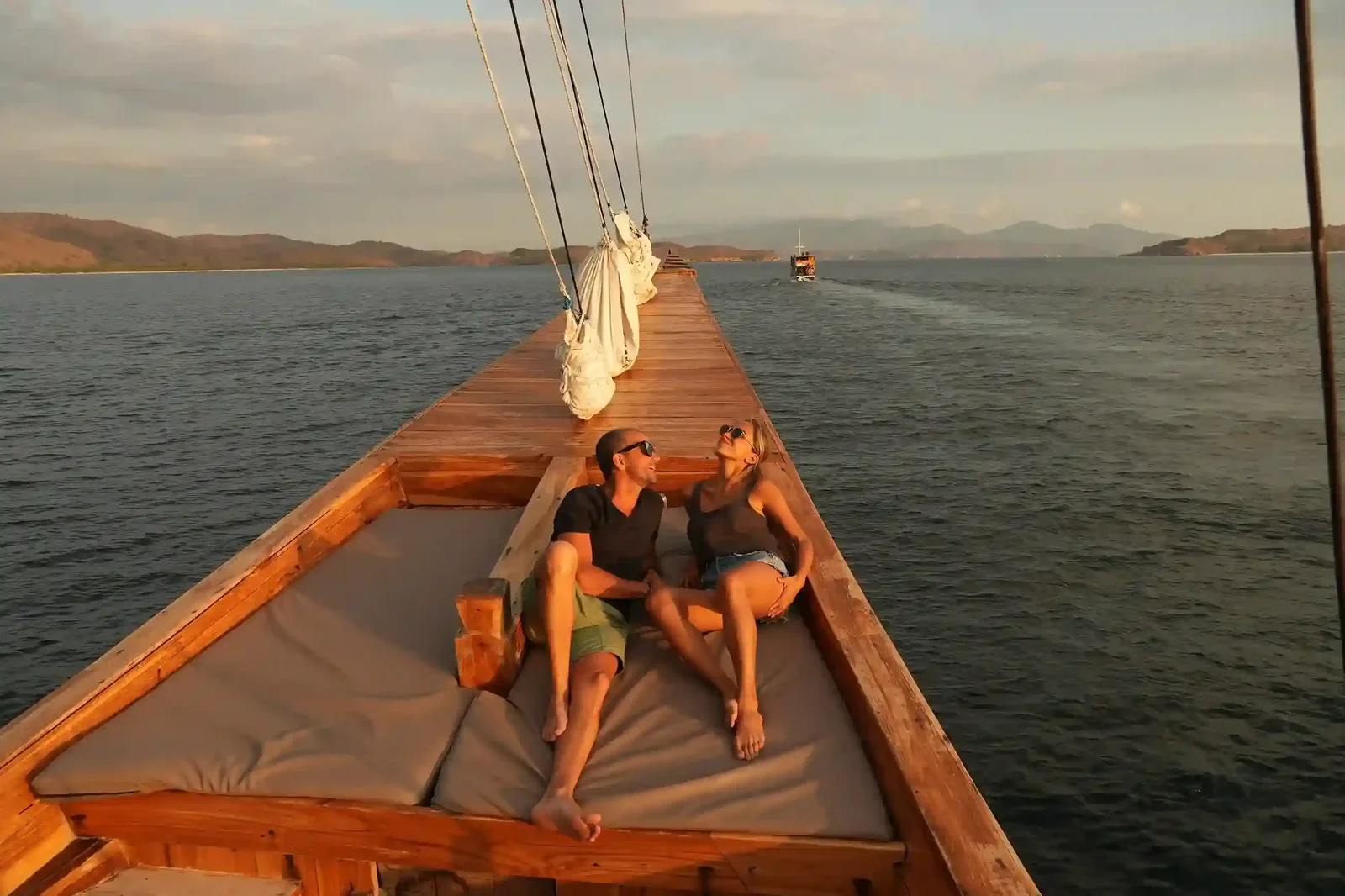
Solo Travelers On Indonesia Liveaboards
Solo liveaboard Indonesia trips are already popular: on a typical Komodo liveaboard open trip, 30–50% of guests travel alone in shared cabins. Solo travelers can join 3D2N sailings from around USD 220 per person (as of August 2026), sharing twin cabins while still having the option to pay a single supplement for private space.
Is a solo liveaboard in Indonesia actually a good idea for 2027–2028?
For independent travelers, a solo liveaboard Indonesia experience is one of the easiest ways to see multiple islands, dive sites, and national parks without managing complex logistics. Boats combine accommodation, guided activities, and meals in one floating “base camp”, which is especially helpful in archipelagos like Komodo, Raja Ampat, and Alor where public transport is limited.
Open trips are designed around shared cabins and mixed groups. On a typical shared komodo liveaboard there will be couples, small friend groups, and solo travelers of different ages and nationalities. Crew manage daily briefings, activity sign-ups, and meal times, so solo guests slide into a set rhythm from day one. Because space is compact, people usually connect quickly over sunrise coffee, dive briefings, or sunset on deck.
As of August 2026, Komodo Luxury data from dozens of departures shows that solo guests tend to join 3D2N to 5D4N itineraries first, then come back for longer 7–10 night expeditions (Banda Sea crossings, Raja Ampat seasons) once comfortable with life onboard. Planning now for 2027–2028 gives time to choose seasons, save for single supplements, and align flights with departure ports.
How do shared cabins, single supplements, and privacy work for solo travelers?
On a bali komodo shared cabin liveaboard or shared cabin lombok liveaboard, twin-share cabins are standard. Solo guests are matched by gender where possible, and most boats use separate male/female bunk or twin cabins unless a mixed group books together. Cabins typically have private or shared bathrooms, air-conditioning, and basic storage.
Single supplements exist for solo travelers wanting private cabins. As of August 2026, many Indonesia boats charge 30–80% on top of the per-person twin-share rate, depending on boat class (Deluxe, VIP, VVIP) and route. For example, a USD 220 Komodo open trip twin-share might cost USD 300–380 for a private cabin on selected departures. Higher-end yachts on Raja Ampat or Banda crossings may price single occupancy closer to brochure cabin value.
Think of shared cabin vs private charter komodo liveaboard as two completely different products. A shared cabin open trip prioritizes value and social atmosphere; a private charter is usually for groups wanting full control of itinerary and schedule, at rates that can go from several thousand dollars per night on deluxe boats to VVIP charters exceeding USD 18,000 per night. Solo travelers almost always find open trips better value, using single supplements only when privacy is essential (remote work, light sleeper, or simply wanting personal space).
What is good shared-cabin etiquette on Komodo and Lombok–Komodo routes?
Shared cabins work smoothly when everyone respects space and routines. On a shared boat lombok komodo trip or round trip komodo liveaboard from lombok, cabins are compact; treating them like a small hotel room that two people must use at different rhythms keeps things pleasant. Packing cubes and a soft duffel help avoid clutter on limited shelving.
Electricity is usually available 24 hours on modern phinisi and yachts, but charging rules vary. Good etiquette includes using shared charging stations in the salon for large devices, keeping alarms on vibration, and using red-light torches at night if returning late to the cabin. Noise carries through wooden hulls; many solo travelers bring ear plugs and an eye mask, and keep phone calls to deck or communal areas.
Bathroom sharing is smoother with quick showers, hanging towels in assigned spots, and keeping personal products in a small bag. If seas are choppy, agree in advance to leave the bathroom door unlocked when not in use for safety. Most crews appreciate guests hanging wet gear in designated outdoor areas rather than cabins to keep humidity under control.
Finally, remember that Indonesia boats have multicultural teams and guests. Simple courtesies—modest attire in dining areas, asking before moving someone’s camera rig, and sharing power outlets—keep the social atmosphere positive for all solo travelers onboard.
Which open-trip routes work best for solo travelers planning 2027–2028?
The most popular solo routes are those that balance cost, ease of access, and social atmosphere. A komodo liveaboard trip is usually first choice: flights from Bali (DPS) to Labuan Bajo (LBJ) take about 1 hour 15 minutes, and 3D2N or 4D3N sailings run most weeks April–November. Komodo open trips mix snorkeling, dragon trekking, and viewpoint hikes, so non-divers and divers can share the same boat.
For travelers starting in Bali, two broad approaches exist. One is to fly to Labuan Bajo and board there, effectively skipping the long sea crossing. The other is to take a bali to komodo boat trip or bali liveaboard crossing trip that sails via Lombok and Sumbawa, often 6–8 days one way. These crossings are social by nature and give a stronger “expedition” feel, but involve more sea days and higher budgets.
The bali to komodo boat trip cost for shared cabins ranges widely as of August 2026, roughly from mid-hundreds to low-thousands of US dollars per person, depending on boat category and length. Many solo travelers compare bali to komodo boat trip vs lombok to komodo options: departures from Lombok can reduce price and sea time, while still including highlights like Moyo, Satonda, and central Komodo. Checking a bali lombok sumbawa komodo liveaboard overview page helps map which ports and routes fit specific dates.
How safe is a shared Indonesia liveaboard for solo travelers?
Indonesia liveaboard safety standards have improved steadily as the market has matured. Reputable fleets operate under Indonesian maritime regulations, and many work with international cruise and dive advisors to update safety protocols annually. Boats carry lifejackets, life rafts, fire extinguishers, and communication equipment; crew complete regular safety drills, especially at the start of high seasons such as April (Komodo) and October (Raja Ampat).
For solo travelers, the main practical safety questions are: cabin security, emergency response, and activity supervision. Cabins usually have lockable doors; some use keycards or padlocks. The best operators provide full safety briefings on day one covering muster stations, lifejacket locations, and dive/snorkel procedures. In Komodo National Park, currents are strong; certified guides and clear pre-briefings are essential for both divers and snorkelers.
Comparing komodo liveaboard vs day trip, overnight vessels offer more comprehensive orientation and slower pace, which many solo travelers find safer and more relaxed than a rushed single-day schedule. For remote routes—Banda Sea crossings, Alor, Cenderawasih—solo guests should confirm that their boat carries satellite communication and oxygen kits, and that evacuation plans exist for medical emergencies. When in doubt, ask for recent photos of safety gear and a sample safety briefing outline before booking.
What extra should solo travelers plan for: costs, food, and comfort?
Price-wise, solo guests on a komodo liveaboard open trip should budget for the trip itself, park fees, and optional extras. Park fees in Komodo for foreign visitors are around IDR 300,000 per diver per day (about USD 18–24) as of August 2026, once entrance, diver surcharge, and harbour fee are combined. Ranger trekking to see dragons adds a small group fee shared among guests.
Beyond the base fare, factor in rental gear if not included, crew tips, bar tabs, and potential single supplements. For many, these extras add 20–40% on top of the headline trip price. Comparing multiple departures and travelling on weekdays can reduce overall spend. Solo divers also often plan one or two nights in Labuan Bajo or Sorong before or after, giving flight buffers and time to decompress.
Food and comfort matter more on multi-night trips. Quality varies between budget backpacker boats and premium yachts. Reading a guide to liveaboard food indonesia helps set expectations for dietary options and mealtime formats. Seasickness medication, reef-safe sunscreen, a lightweight sarong, and a small dry bag are simple additions that make day-to-day life easier, especially on smaller boats where decks may get wet during crossings.
- Typical Komodo shared open trip 3D2N rates from around USD 220 per person (weekday, twin-share, as of August 2026; park fees extra).
- Komodo National Park core fees: ~IDR 300,000 per foreign diver per day (entrance + diver surcharge + harbour, August 2026).
- Flight time Bali (DPS) to Labuan Bajo (LBJ): approximately 70–80 minutes nonstop.
- Prime seasons: Komodo April–November; Raja Ampat October–April; Banda Sea crossings September–November and March–April.
- Standard open-trip cabins: twin bunks or twin beds, air-conditioned, with private or shared bathrooms.
- Approximate single supplements: 30–80% above twin-share rate depending on boat class and route (August 2026).
- VVIP Indonesia yacht charters can exceed USD 18,000 per night for full-boat private use (August 2026).
Frequently asked questions
Solo Travelers On Indonesia Liveaboards?
Solo travelers are common on Indonesia liveaboards, especially in Komodo and Raja Ampat. Operators match guests in shared twin cabins and create social open trips with group briefings, meals, and guided activities. Single supplements allow private cabins if desired. Safety briefings, clear itineraries, and structured days make liveaboards a manageable choice even for first-time solo adventurers.
Is an open trip Lombok to Komodo liveaboard better than starting in Bali for solos?
An open trip Lombok to Komodo liveaboard shortens sea time versus a full bali to komodo boat trip, often reducing cost and exposure to long crossings. Many itineraries still include Moyo, Satonda, and central Komodo highlights. Bali remains the main international gateway, so some solo travelers fly or fast boat to Lombok, join a shared cabin trip, then fly home via Labuan Bajo.
How does a Bali to Komodo boat trip compare with flying and joining in Labuan Bajo?
A direct komodo boat trip from bali is an adventure in itself, with multiple islands and open-ocean passages, but it takes more days and budget. Flying Bali–Labuan Bajo, then boarding a komodo liveaboard trip there, cuts travel time to about 1–1.5 hours in the air. Many solo guests choose the shorter flight-plus-boat combo for a first visit and keep longer crossings for a future expedition.
Are Indonesia liveaboards safe for solo female travelers?
Reputable operators support solo female guests with gender-matched cabins where possible, clear conduct rules, and professional crews. Indonesia liveaboard safety standards emphasize full briefings, lifejackets, and guided activities. Solo female travelers often choose mid- to upper-range boats, share their itinerary with family, and book through established platforms that have been operating since at least 2015.
Should solo divers choose a diving-focused liveaboard or a mixed-activity trip?
Dedicated diving liveaboard indonesia trips suit certified divers wanting 3–4 dives per day and longer itineraries, especially in Raja Ampat or Banda Sea. Mixed trips, as seen on many Komodo boats, combine snorkeling, easy dives, and hikes like Padar viewpoint. Solo travelers who are unsure about multiple dives daily often start with mixed trips, then move to specialist diving itineraries later.
What’s the best way to depart from Bali for a solo liveaboard?
Most solo travelers fly from Bali to gateway ports like Labuan Bajo or Sorong and join boats there. Some also join a shared boat trip that starts in Bali itself. Reviewing the dedicated bali liveaboard departure information helps compare flights, transfer times, and pre-night hotel options before choosing a specific itinerary and vessel.
To plan a 2027–2028 solo liveaboard in Komodo, Raja Ampat, Banda Sea, or beyond, contact the Komodo Luxury desk via WhatsApp 628113823875 or email sales@komodoluxury.com for tailored route and boat suggestions.
Last updated 6 August 2026